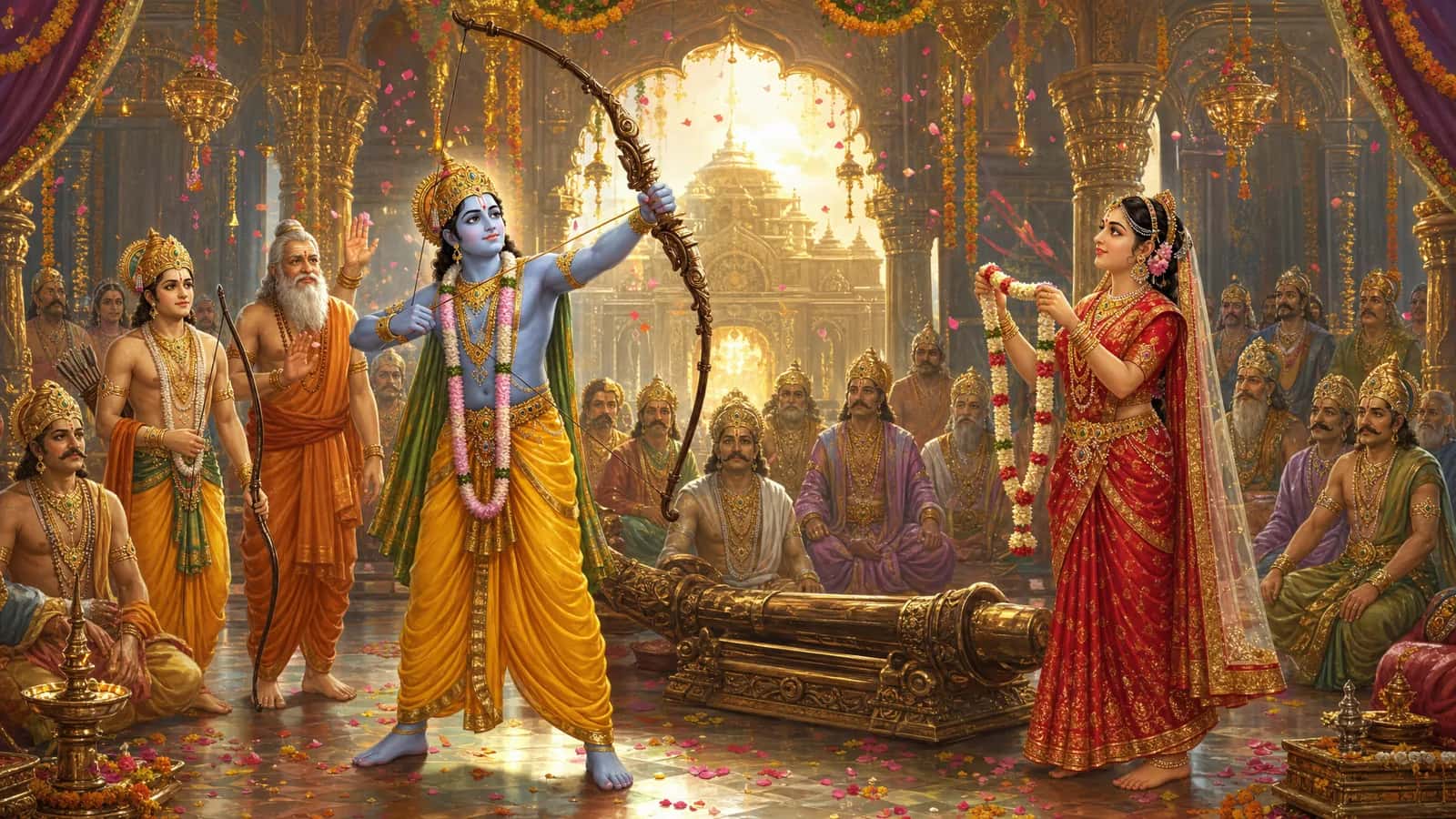
Bal Kand opens with invocations and the telling of how Shri Ram’s story comes to be heard. The frame stories prepare us to receive it with reverence. The account of Shiva and Sati comes before the birth of Shri Ram and His brothers in Ayodhya, in the household of King Dashrath. From these beginnings, the narrative moves to the sage Vishwamitra and the episode of Ahilya.
At Mata Sita’s swayamvar, Shri Ram breaks Shiva’s bow. The story then leads to the wedding at Janakpur. What begins in prayer thus unfolds into the events through which we come to know Shri Ram, first in Ayodhya and then through the episodes that lead to His marriage with Mata Sita.
The teaching is to approach Shri Ram’s story with reverence, allowing attention to His deeds to nourish devotion. Bal Kand contains 361 dohas.
In this kand
- InvocationInvocations
- InvocationSalutations to the Guru
- Doha 2Salutations to Brāhmaṇas and saints
- Doha 3bSalutations to the wicked
- Doha 4Contrast between saints and the evil-minded
- Doha 7dSalutations to all living beings as so many images of Śrī Rāma
- Doha 8Tulasīdāsa’s humility and the glory of poetry describing Śrī Rāma’s greatness
- Doha 13Salutations to the immortal bards
- Doha 14gSalutations to the sage Vālmīki, the Vedas, Brahmā, Śiva, Pārvatī and other gods and goddesses
- Doha 15Salutations to the abode and companions of Sītā and Rāma
- Doha 18Salutations to and the glory of the Name
- Doha 27The excellences of Śrī Rāma and the greatness of His story
- Doha 34The date of composition of the Rāmacaritamānasa
- Doha 34The metaphorical representation of the Mānasa as a lake and its glory
- Doha 44Dialogue between the sages— Yājñavalkya and Bharadvāja and the greatness of Prayāga
- Doha 50Satī’s bewilderment, Śrī Rāma’s divine glory and Satī’s remorse
- Doha 56Repudiation of Satī by Śiva and Śiva’s Samādhi (trance)
- Doha 62Satī’s visit to Dakṣa’s sacrifice
- Doha 64Satī’s self-immolation through the fire of Yoga out of indignation at the slight offered to Her Spouse by Her father: destruction of Dakṣa’s sacrifice
- Doha 64Descent of Goddess Pārvatī and Her penance
- Doha 76Śrī Rāma’s intercession with Bhagavān Śiva for marriage
- Doha 76Pārvatī’s unique fidelity as revealed through Her test by the seven seers
- Doha 82Love’s departure on the errand of the gods and his being burnt to death
- Doha 87Śiva’s boon to Rati (Cupid’s consort)
- Doha 87The god’s prayer to Śiva for marriage; the seven seers’ visit to Pārvatī
- Doha 92Śiva’s peculiar marriage procession and preparations for the wedding (undertaken by the other party)
- Doha 95Śiva’s nuptials
- Doha 120dA dialogue between Śiva and Pārvatī
- Doha 121Causes of Śrī Rāma’s Descent
- Doha 125Ego’s sway over Nārada and the effect of the Lord’s Māyā
- Doha 132Princess Viśvamohinī’s self-selection of a husband; Nārada’s pronouncing a curse on the attendants of Śiva as well as on the Lord Himself and his subsequent release from the spell of infatuation
- Doha 140The austerities of Manu and Śatarūpā and their receiving boon from the Lord
- Doha 151The story of king Pratāpabhānu
- Doha 175The birth of Rāvaṇa and his brothers, their austerities, opulence and tyranny
- Doha 183The piteous appeal of mother Earth and other gods
- Doha 186The Lord’s compassion on them
- Doha 188King Daśaratha’s sacrifice for the birth of a son and his Queens’ pregnancy
- Doha 190The Lord’s manifestation and the delightful nature of His childish sports
- Doha 207Viśvāmitra visits king Daśaratha and asks for Śrī Rāma and Lakṣmaṇa
- Doha 208bProtection of Viśvāmitra’s sacrifice
- Doha 210Redemption of Ahalyā
- Doha 211Entry of Viśvāmitra with Śrī Rāma and Lakṣmaṇa into the precincts of Mithilā
- Doha 214Janaka’s ecstasy of love at the sight of Śrī Rāma and Lakṣmaṇa
- Doha 218A visit to the town by Śrī Rāma and Lakṣmaṇa
- Doha 226Śrī Rāma’s visit to Janaka’s garden; Rāma and Sītā catch sight of each other
- Doha 234Worship of Goddess Pārvatī by Sītā, Her receiving blessings from the Goddess and a dialogue between Śrī Rāma and Lakṣmaṇa
- Doha 238Śrī Rāma’s entry into the pavilion erected for the Bow-stringing performance alongwith Lakṣmaṇa
- Doha 246Sītā’s entry into the pavilion
- Doha 248Proclamation of Janaka’s vow by his heralds
- Doha 250The princes’ failure to lift the bow and Janaka’s despondent utterance
- Doha 250Lakṣmaṇa’s fulmination
- Doha 261The breaking of the Bow
- Doha 263Sītā places the wreath of victory round Śrī Rāma’s neck
- Doha 270Arrival of Paraśurāma, exchange of sharp words between Lakṣmaṇa and Paraśurāma and Śrī Rāma’s triumph over the latter
- Doha 285Janaka’s despatching of messengers to Ayodhyā and departure of the marriage procession from there
- Doha 303Arrival of the marriage procession and its reception etc., at Janakapura
- Doha 322The wedding of Sītā and Śrī Rāma and Their farewell
- Doha 342Return of the marriage procession to Ayodhyā and rejoicing in the city
- Doha 361The glory of hearing and singing the story of Śrī Rāma
Contents
- ॐ
- 1
- 2
- 3b
- 4
- 5
- 6
- 7d
- 8
- 9
- 10b
- 11
- 12
- 13
- 14g
- 15
- 16
- 17
- 18
- 19
- 20
- 21
- 22
- 23
- 24
- 25
- 26
- 27
- 28b
- 29c
- 30b
- 31
- 32b
- 33
- 34
- 35
- 36
- 37
- 38
- 39
- 40
- 41
- 42
- 43b
- 44
- 45
- 46
- 47
- 48b
- 49
- 50
- 51
- 52
- 53
- 54
- 55
- 56
- 57b
- 58
- 59
- 60
- 61
- 62
- 63
- 64
- 65
- 66
- 67
- 68
- 69
- 70
- 71
- 72
- 73
- 74
- 75
- 76
- 77
- 78
- 79
- 80
- 81
- 82
- 83
- 84
- 85
- 86
- 87
- 88
- 89
- 90
- 91
- 92
- 93
- 94
- 95
- 96
- 97
- 98
- 99
- 100
- 101
- 102
- 103
- 104
- 105
- 106
- 107
- 108
- 109
- 110
- 111
- 112
- 113
- 114
- 115
- 116
- 117
- 118
- 119
- 120d
- 121
- 122
- 123
- 124b
- 125
- 126
- 127
- 128
- 129
- 130
- 131
- 132
- 133
- 134
- 135
- 136
- 137
- 138
- 139
- 140
- 141
- 142
- 143
- 144
- 145
- 146
- 147
- 148
- 149
- 150
- 151
- 152
- 153
- 154
- 155
- 156
- 157
- 158
- 159b
- 160
- 161b
- 162
- 163
- 164
- 165
- 166
- 167
- 168
- 169
- 170
- 171
- 172
- 173
- 174
- 175
- 176
- 177
- 178b
- 179
- 180
- 181
- 182b
- 183
- 184
- 185
- 186
- 187
- 188
- 189
- 190
- 191
- 192
- 193
- 194
- 195
- 196
- 197
- 198
- 199
- 200
- 201
- 202
- 203
- 204
- 205
- 206
- 207
- 208b
- 209
- 210
- 211
- 212
- 213
- 214
- 215
- 216
- 217
- 218
- 219
- 220
- 221
- 222
- 223
- 224
- 225
- 226
- 227
- 228
- 229
- 230
- 231
- 232
- 233
- 234
- 235
- 236
- 237
- 238
- 239
- 240
- 241
- 242
- 243
- 244
- 245
- 246
- 247
- 248
- 249
- 250
- 251
- 252
- 253
- 254
- 255
- 256
- 257
- 258
- 259
- 260
- 261
- 262
- 263
- 264
- 265
- 266
- 267
- 268
- 269
- 270
- 271
- 272
- 273
- 274
- 275
- 276
- 277
- 278
- 279
- 280
- 281
- 282
- 283
- 284
- 285
- 286
- 287
- 288
- 289
- 290
- 291
- 292
- 293
- 294
- 295
- 296
- 297
- 298
- 299
- 300
- 301
- 302
- 303
- 304
- 305
- 306
- 307
- 308
- 309
- 310
- 311
- 312
- 313
- 314
- 315
- 316
- 317
- 318
- 319
- 320
- 321
- 322
- 323
- 324
- 325
- 326
- 327
- 328
- 329
- 330
- 331
- 332
- 333
- 334
- 335
- 336
- 337
- 338
- 339
- 340
- 341
- 342
- 343
- 344
- 345
- 346
- 347
- 348
- 349
- 350b
- 351
- 352
- 353
- 354
- 355
- 356
- 357
- 358
- 359
- 360
- 361
The seven kands
From the Gita Press, Gorakhpur edition. Buy the book