Ramayana.com

The official home of the Ramayana

Read the Ramcharitmanas and the Valmiki Ramayana, every verse with Hindi and English meaning. Free.

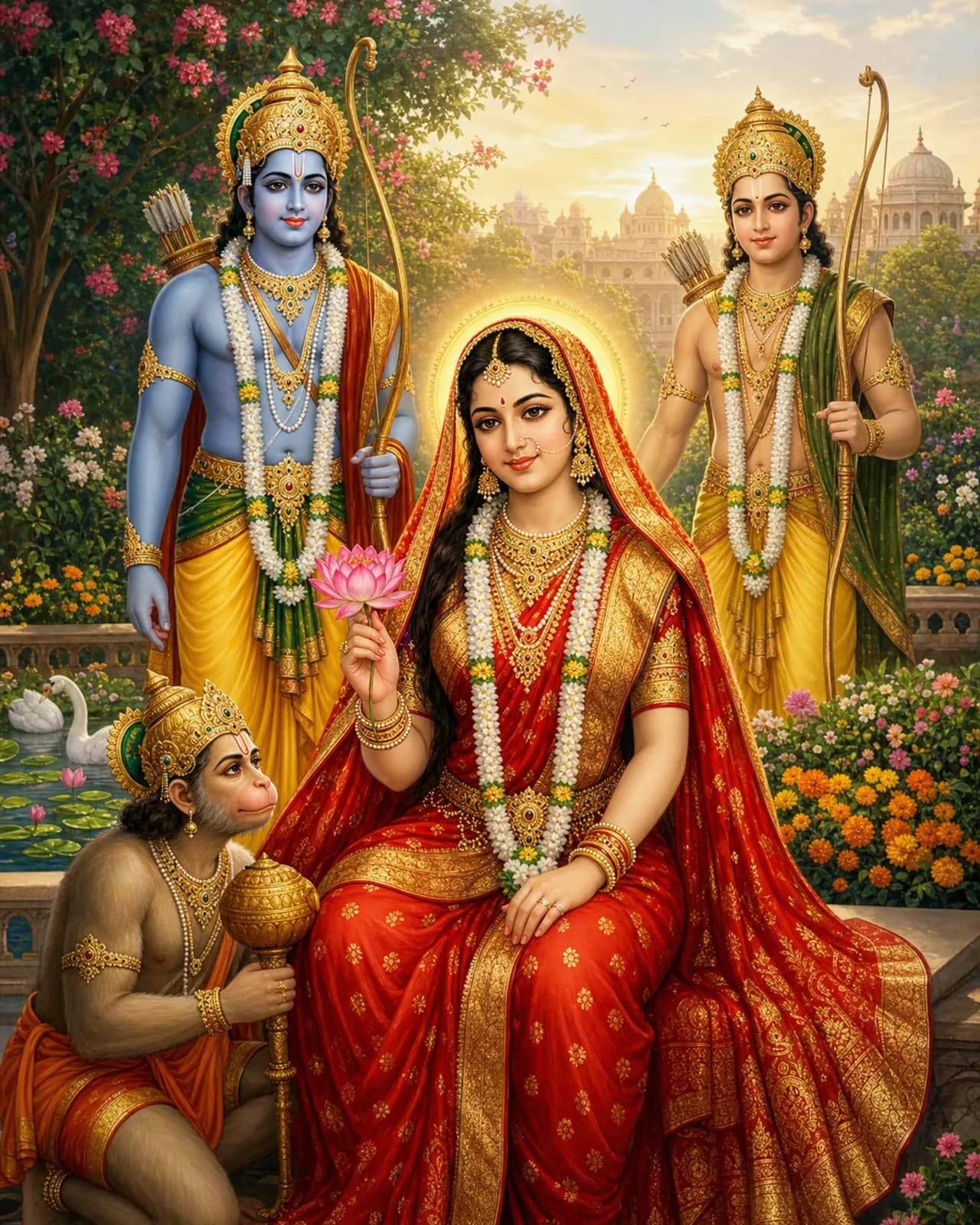
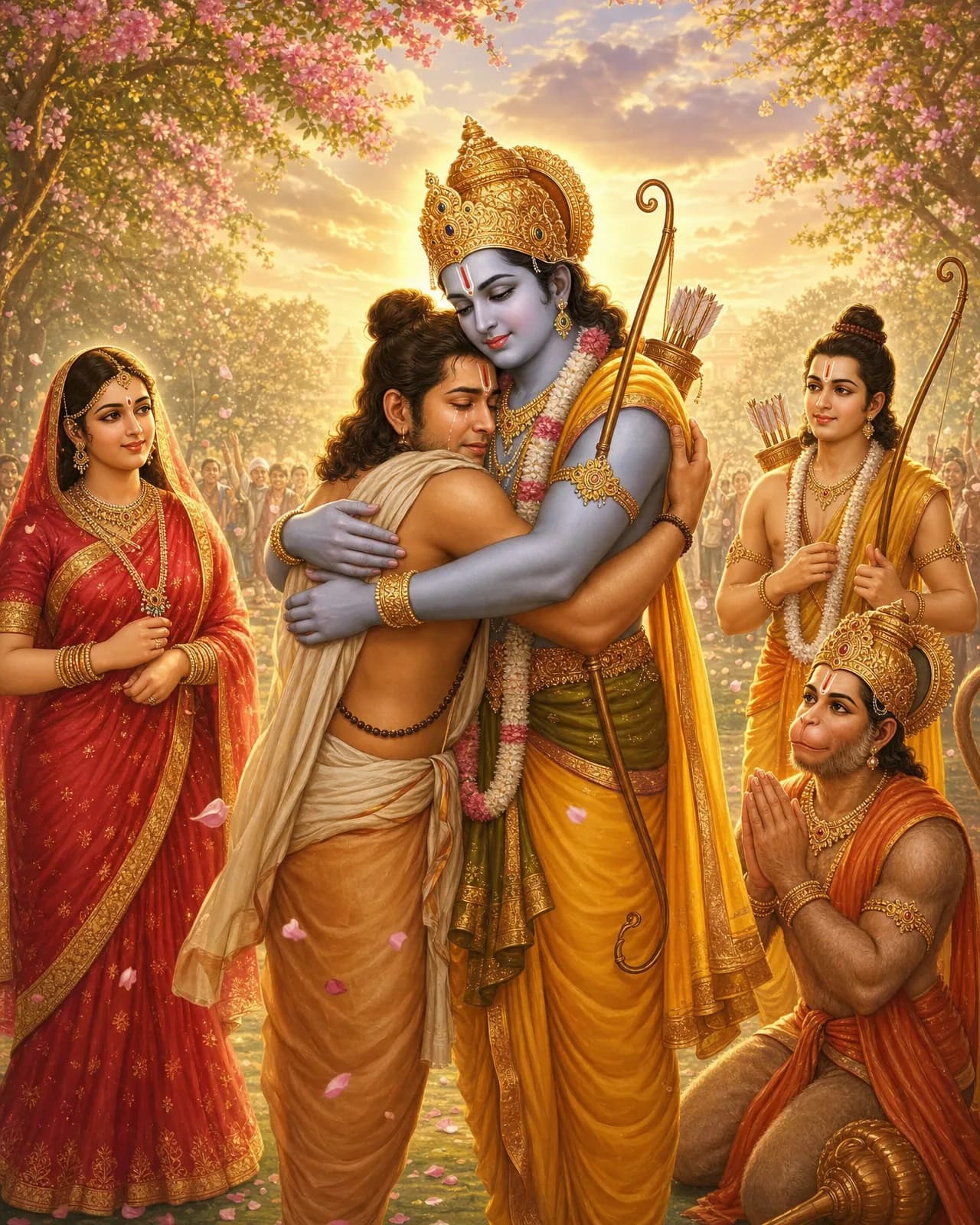
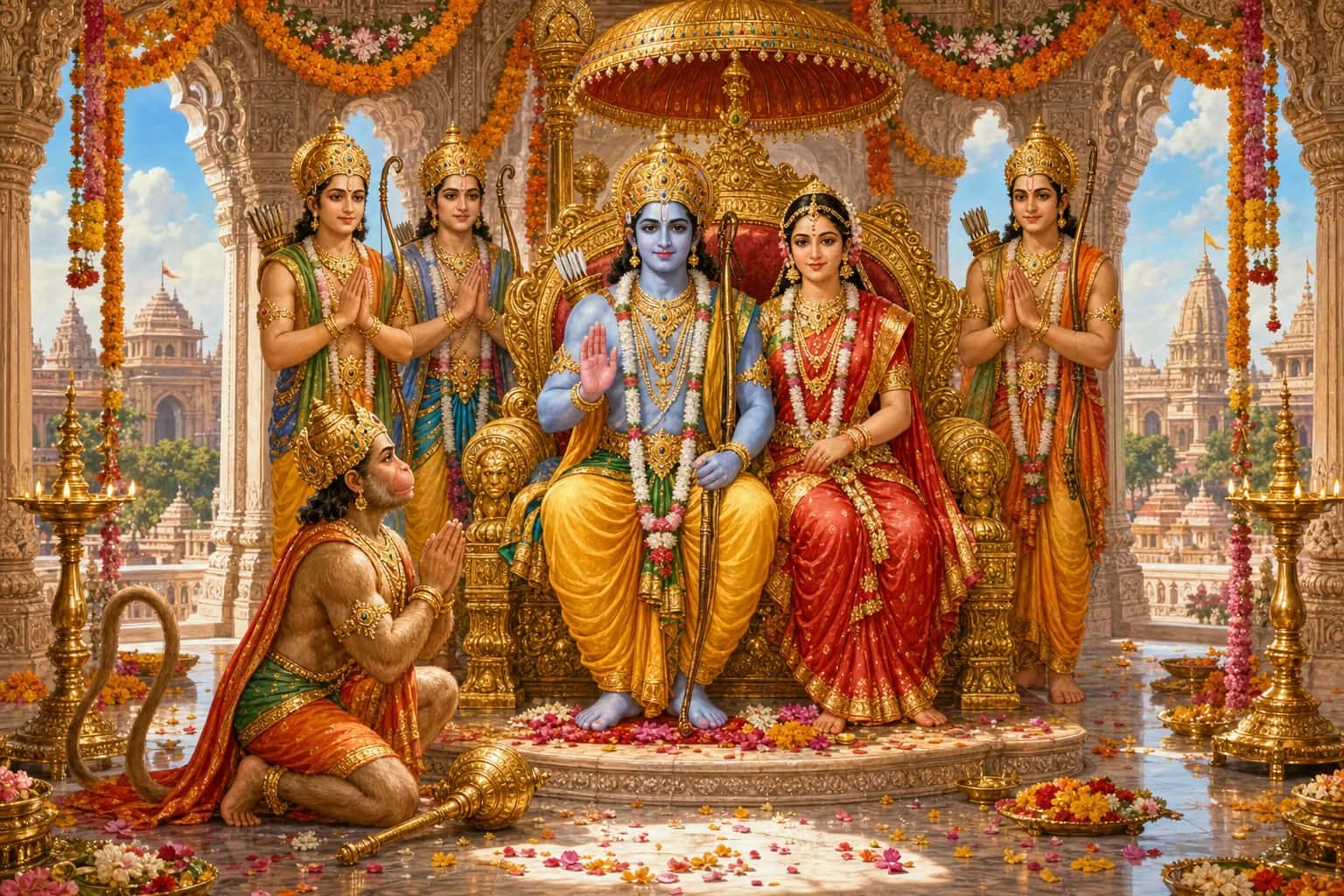
Shri Ram and Mata Sita enthroned at Ayodhya, with Lakshman, Bharat and Shatrughna standing behind and Hanumanji kneeling before them.

Read the Ramayana online

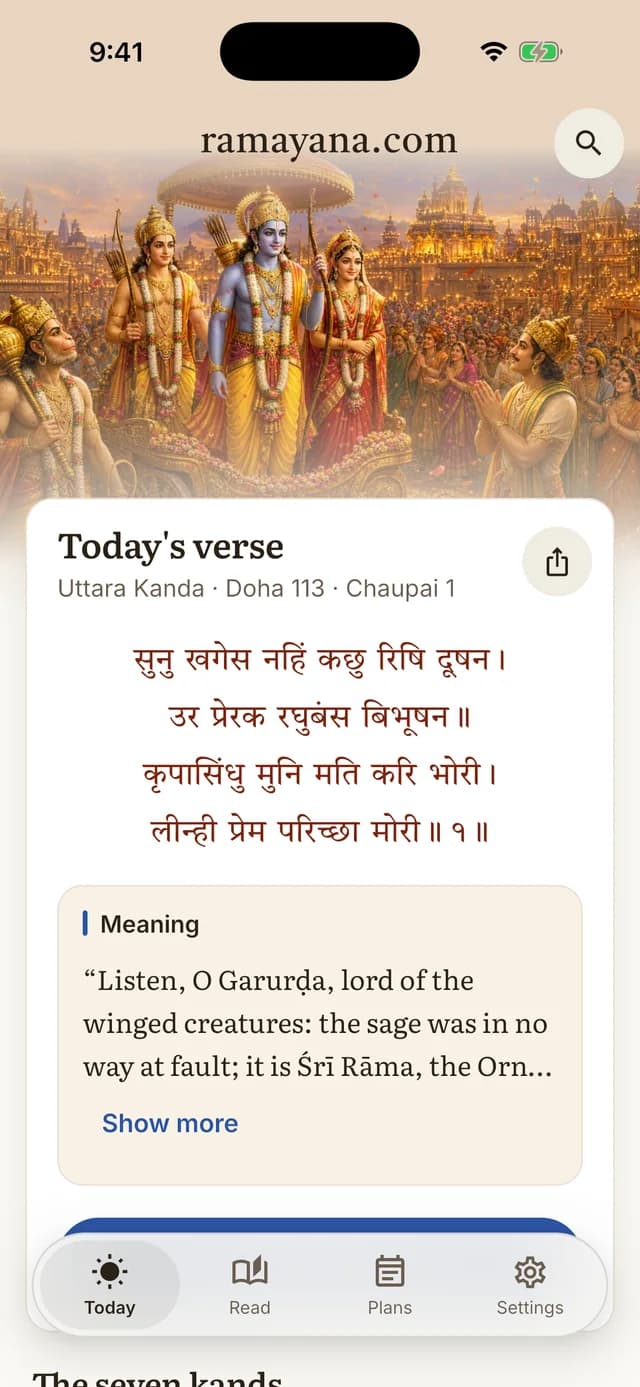
Today's Ramayan verse

झूठेहुँ हमहि दोषु जनि देहू। दुइ कै चारि मागि मकु लेहू॥ रघुकुल रीति सदा चलि आई। प्रान जाहुँ बरु बचनु न जाई॥२॥

“Pray, do not level a false charge against me; you might as well ask four boons instead of two. It has always been the rule with the race of Raghus that one’s plighted word must be redeemed even at the cost of one’s life. (2)

Ayodhya Kand, Doha 28

Ramayan verses about

The free Ramayan app

The whole book on your phone. No ads. Works offline.

Get the app

About the Ramayana

What is the Ramayana?

The Ramayana tells the story of Shri Ram, Mata Sita and the practice of dharma through their lives. Maharshi Valmiki's Sanskrit epic is the earliest telling. Goswami Tulsidas retells the story in the Awadhi Ramcharitmanas, the scripture most Hindi-speaking families read and recite. Both invite us to learn through the deeds of Shri Ram.

Understand the two texts

Who wrote the Ramayana?

Maharshi Valmiki composed the Valmiki Ramayana in Sanskrit and is honoured as the Adi Kavi, the first poet. Goswami Tulsidas composed the Ramcharitmanas in Awadhi in the sixteenth century. In everyday speech across north India, the name Ramayan often refers to the Ramcharitmanas. Knowing the author helps us recognise which scripture we are reading.

Meet the authors

What is the difference between the Ramayana and the Ramcharitmanas?

The Valmiki Ramayana is Maharshi Valmiki's Sanskrit epic, while the Ramcharitmanas is Goswami Tulsidas's Awadhi retelling of Shri Ram's story. Both have seven divisions, but their verse forms and presentation differ. The Valmiki Ramayana is composed in shlokas. The Ramcharitmanas uses mainly chaupais and dohas, making its teachings familiar through household reading and recitation.

Compare the scriptures

What are the seven kands of the Ramayana?

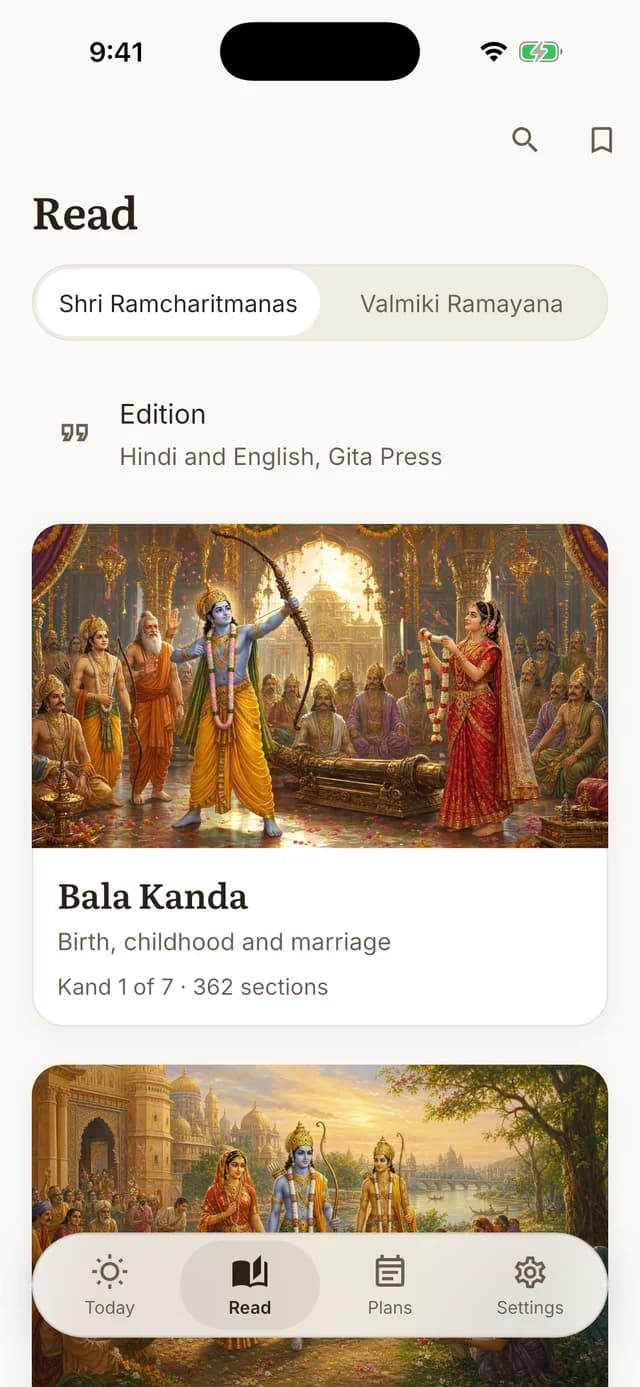
The Ramcharitmanas by Goswami Tulsidas has seven kands: Bal, Ayodhya, Aranya, Kishkindha, Sunder, Lanka and Uttar. They carry Shri Ram's story from His birth through exile, the search for Mata Sita, the war and His reign. Maharshi Valmiki's Sanskrit Ramayana follows the same seven-part order, with its sixth division called Yuddha Kanda, also known as Lanka Kanda.

Read the seven kands

Where should I start reading the Ramayana?

Begin with Sunderkand in Goswami Tulsidas's Ramcharitmanas if you want a manageable first reading. Its sixty dohas follow Hanumanji as he crosses the sea, finds Mata Sita and returns with her message to Shri Ram. Read each verse with its meaning. For the complete story in order, begin with Bal Kand and continue through the seven kands.

Begin with Sunderkand