Ramayana and Ramcharitmanas: what is the difference?
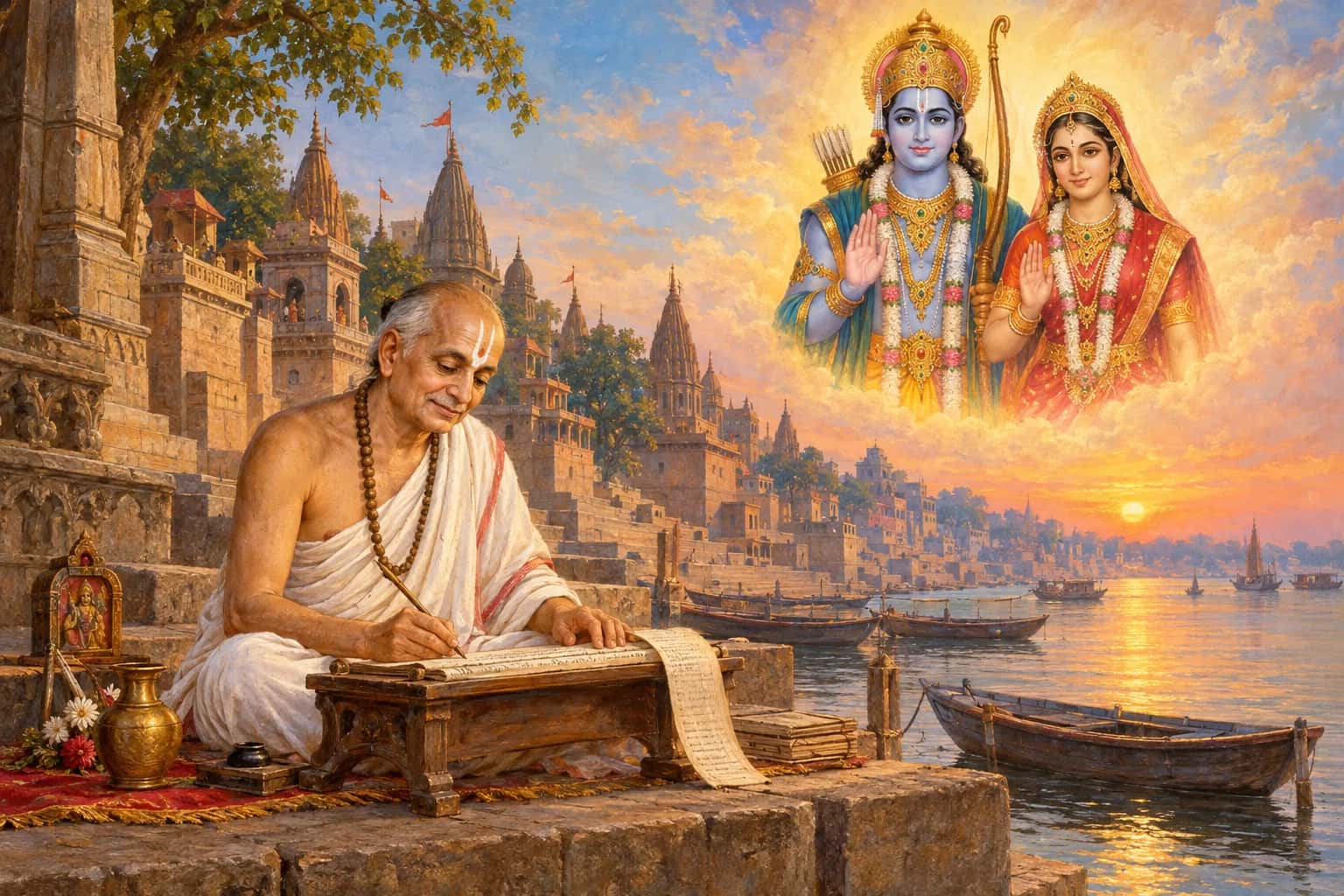
The Valmiki Ramayana is the original Sanskrit epic by Maharshi Valmiki. The Ramcharitmanas is Goswami Tulsidas's 16th century retelling in Awadhi, the language of the people of the Ram Janmabhoomi region. Both tell Shri Ram's story in seven kands. They share the same central story, while differing in language, verse form, framing and the emphasis of their teaching.
In everyday speech in north India, “Ramayan” usually means the Ramcharitmanas. Thus, a family reading the Ramayan at home may be reading Goswami Tulsidas's Awadhi verses. When comparing the two works, the name Valmiki Ramayana makes clear which text we mean.
The two texts at a glance
| Valmiki Ramayana | Ramcharitmanas | |
|---|---|---|
| Author | Maharshi Valmiki, honoured as the Adi Kavi, the first poet | Goswami Tulsidas |
| Language | Sanskrit | Awadhi |
| Century | Scholars most often place the core between the 7th and 4th centuries BCE. Devotees place the events in the Treta Yuga. | 16th century. Goswami Tulsidas records beginning it in 1574 CE. |
| Verse form | Shlokas | Mainly chaupais and dohas, with sorathas and chhands |
| Length | Traditionally about 24,000 shlokas | 1,074 dohas and 6,157 verse units in the Gita Press edition used here |
| Kand names | Bala, Ayodhya, Aranya, Kishkindha, Sundara, Yuddha, Uttara | Bal, Ayodhya, Aranya, Kishkindha, Sundar, Lanka, Uttar |
| How the story is framed | Lava and Kusha learn the poem from Maharshi Valmiki and sing it | Four tellings: Shiva to Parvati, Kakbhushundi to Garuda, Yajnavalkya to Bharadwaj, and Goswami Tulsidas to his readers |
| Who reads it today | Readers studying Shri Ram's story through the Sanskrit epic and its translations | Most Hindi-speaking families who read and recite the Ramayana |
| The edition on Ramayana.com | Complete Gita Press editions, Sanskrit with Hindi or English meaning | Gita Press text, with Hindi tika by Hanuman Prasad Poddar and English translation |
Why Goswami Tulsidas wrote in the people's language
Scriptural teaching must enter our understanding if it is to guide our conduct. Goswami Tulsidas tells Shri Ram's story in Awadhi, bringing it into the language of the people of the Ram Janmabhoomi region. Readers can receive its teachings through familiar words and carry them into daily life.
The name Ramcharitmanas means “the Manas lake of Shri Ram's deeds”. Its subject is Shri Ram, whose deeds give the reader instruction in dharma and devotion. The language serves that purpose.
For example, a child may remember an instruction yet need it explained in familiar words before knowing how to act upon it. Once the meaning becomes clear, the instruction can guide a choice. Similarly, reading scripture in a language we understand helps us consider what its teaching asks of us.
What is the same?
Both works tell Shri Ram's story through seven kands. The broad sequence is familiar: His birth in Ayodhya, His marriage to Mata Sita, the exile, Mata Sita's abduction, Hanumanji's service, the war with Ravan and the return to Ayodhya.
The events also give us occasions to examine our own conduct. Shri Ram's exile brings duty before us. Bharat's refusal of the throne directs our attention to devotion. Hanumanji's service shows how strength finds its purpose in serving the Lord.
Reading the same episode in both works allows us to give it fresh attention. Familiarity with the story need not mean that we have finished learning from it.
What differs in the telling?
The frame stories shape how we listen. Goswami Tulsidas presents the story through four tellings. Shiva teaches Parvati, Kakbhushundi teaches Garuda, Yajnavalkya teaches Bharadwaj, and the poet addresses his readers. Shri Ram's deeds are received through these relationships of teaching and listening.
Bhakti guides the Ramcharitmanas. Its emphasis on devotion becomes especially clear in Uttar Kand, with its teaching on bhakti and praise of the Lord's Name. The reader is led from hearing about Shri Ram to considering how to turn the heart towards Him.
The sixth kand has a different name. The Valmiki Ramayana calls it Yuddha Kanda, also known as Lanka Kanda. In the Ramcharitmanas, it is Lanka Kand. The difference in name does not indicate a different place in the sequence.
Mata Sita's fire ordeal receives a particular explanation. In Goswami Tulsidas's telling, it is the return of the real Mata Sita, who has been kept with Agni. This explanation matters when reading the episode. We should attend to how each work tells the story.
Which should we read first, and why read both?
Begin with the text whose meaning you can follow most readily. For many Hindi-speaking readers, the Ramcharitmanas offers a familiar beginning through its Awadhi verses and Hindi tika. Readers seeking the original Sanskrit epic can begin with the Valmiki Ramayana, alongside Hindi or English meaning.
There is no need to finish both quickly. Read a passage, understand it, and consider its teaching before moving on. Then read the corresponding episode in the other work. The free Ramayan app offers both texts for continued reading on the phone, with offline access and bookmarks.
Questions people ask
Is Ramcharitmanas the same as Ramayana?
The Ramcharitmanas tells Shri Ram's story, so it is commonly called the Ramayan in north India. It is nevertheless a distinct work by Goswami Tulsidas, written in Awadhi. The Valmiki Ramayana is Maharshi Valmiki's Sanskrit epic. Naming the author helps distinguish the two when discussing a passage or choosing what to read.
Which came first, Valmiki Ramayana or Ramcharitmanas?
The Valmiki Ramayana came first. Scholars most often place its core composition between the 7th and 4th centuries BCE. Goswami Tulsidas composed the Ramcharitmanas in the 16th century and records beginning it in Ayodhya on Ram Navami in 1574 CE. These composition dates are distinct from the traditional placement of Shri Ram's events in the Treta Yuga.
Is Ramcharitmanas written in Hindi or Sanskrit?
The Ramcharitmanas is written in Awadhi, a language of the people of the Ram Janmabhoomi region. It is mainly composed in chaupais and dohas, with sorathas and chhands. On Ramayana.com, the original Awadhi appears with Hindi tika and English translation, helping readers follow the meaning as they read.
Can I read both if I do not know Sanskrit or Awadhi?
Yes. Ramayana.com provides the complete Valmiki Ramayana in Sanskrit with Hindi or English meaning, and the complete Ramcharitmanas in Awadhi with Hindi tika and English translation. Begin with the meaning in the language you understand. Read a small portion regularly, then return to the original verses with that understanding.