Shri Ramcharitmanas
All seven kands, every verse with its meaning.
The seven kands
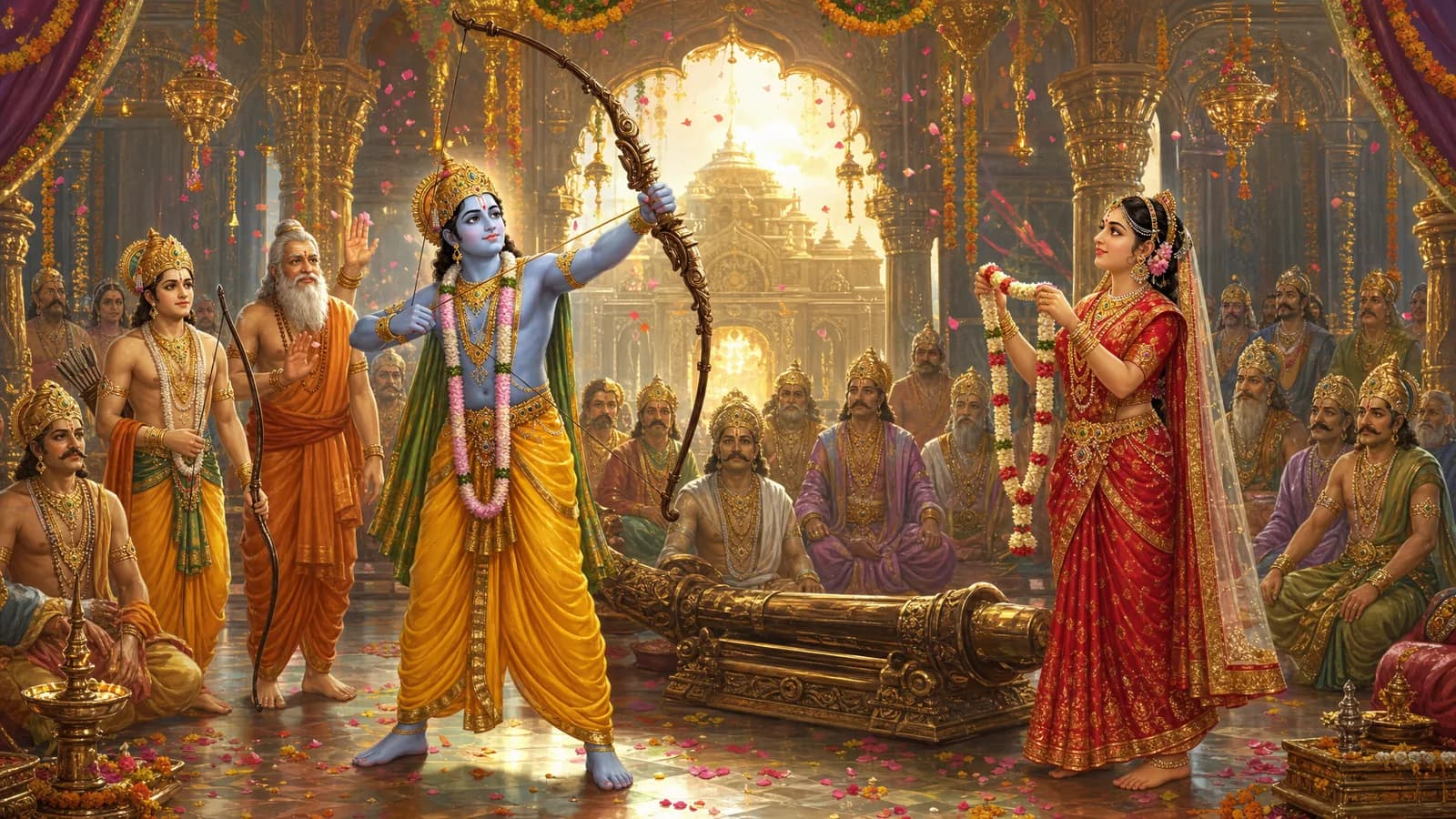


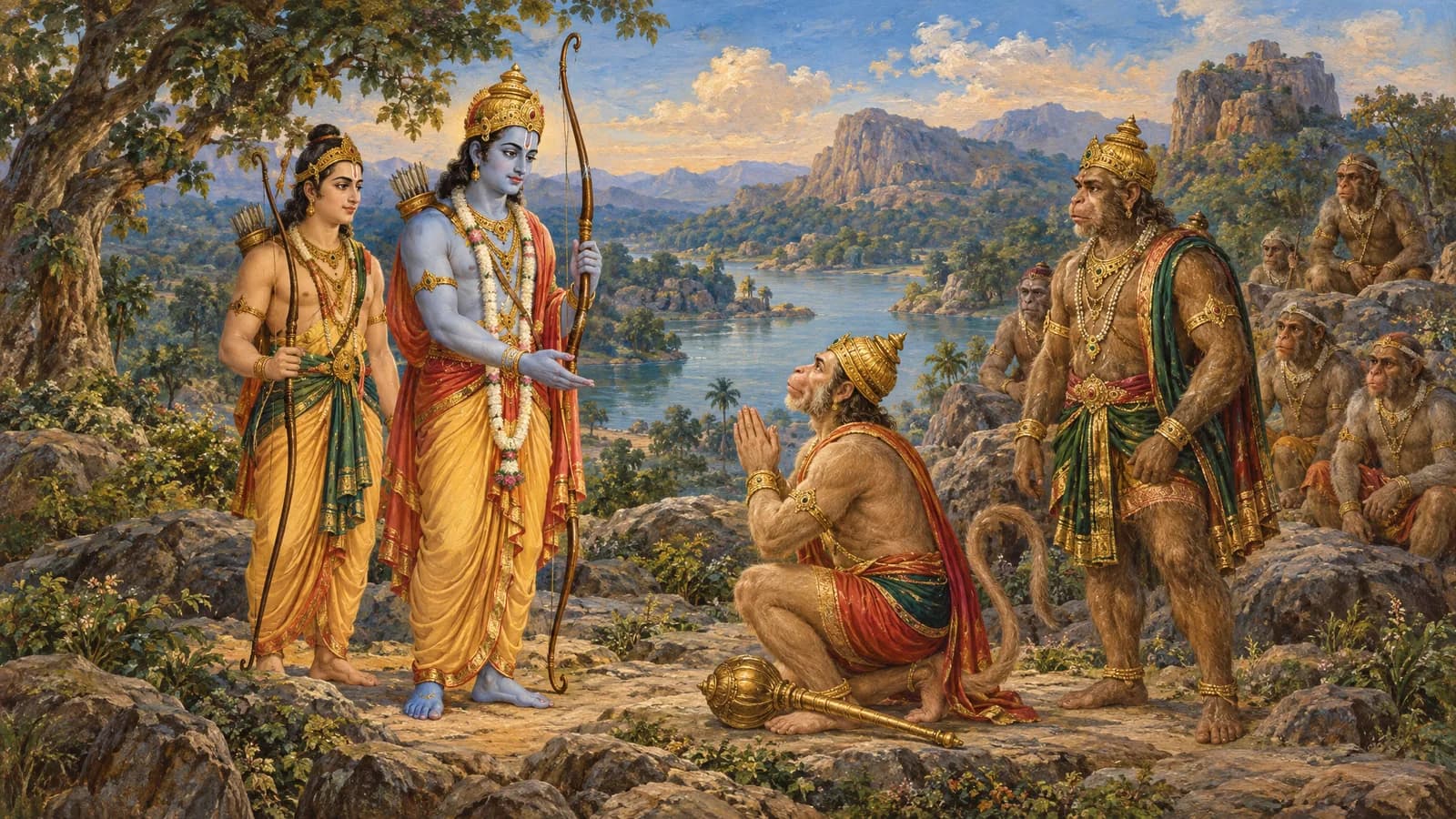


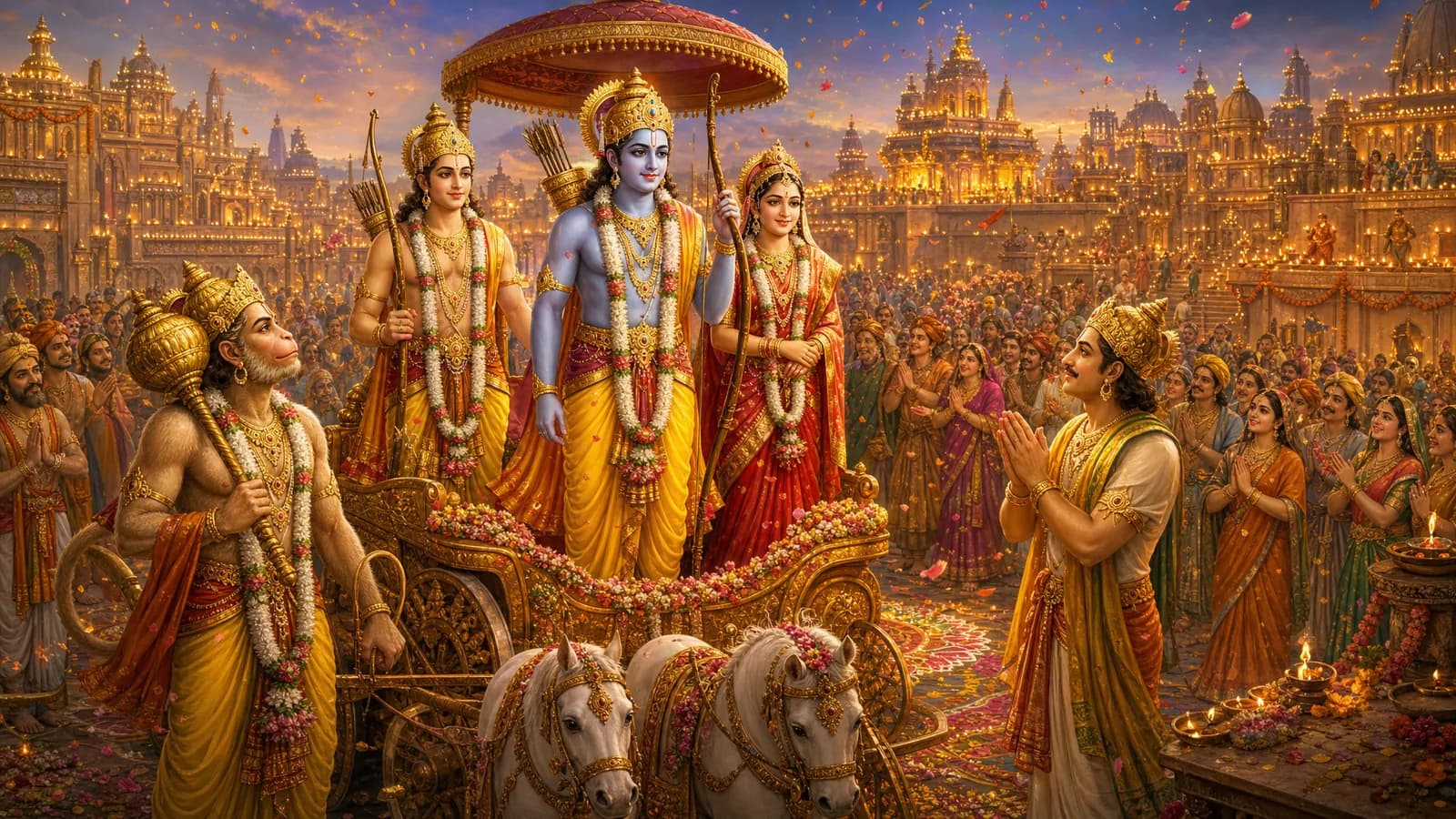
What the Ramcharitmanas is
“Is the Ramcharitmanas the Ramayana I have heard at home?” For most Hindi-speaking families, it is. The Ramcharitmanas is Goswami Tulsidas's retelling of the story of Shri Ram in Awadhi, a language of the people of the Ram Janmabhoomi region. It is the scripture these families read and recite, and usually mean when they say “Ramayan.”
Goswami Tulsidas records that he began composing it in Ayodhya on Ram Navami in 1574 CE. Its name means “the Manas lake of Shri Ram's deeds.” He tells the story mainly through chaupai, a form with four quarter-lines, and doha, a couplet. These forms carry the account through seven kands: Bal, Ayodhya, Aranya, Kishkindha, Sunder, Lanka and Uttar.
The story is framed through four tellings: Shiva speaks to Parvati, Kakbhushundi to Garuda, Yajnavalkya to Bharadwaj, and Goswami Tulsidas to his readers. Thus, as we read, we also listen to the sacred conversations through which he presents Shri Ram's deeds and the teaching on devotion.
Awadhi brings this telling into the language of the people. Its place in family reading and recitation explains why the Ramcharitmanas is the Ramayana of the Hindi home. Many readers come to it with lines they have already heard spoken or sung.
This reader presents the complete original Awadhi text, verse by verse, with the Gita Press Hindi tika by Hanuman Prasad Poddar and the Gita Press English translation. Begin with Bal Kand, or continue reading on your phone with the free Ramayan app, which also works offline.
From the Gita Press, Gorakhpur edition. Buy the book