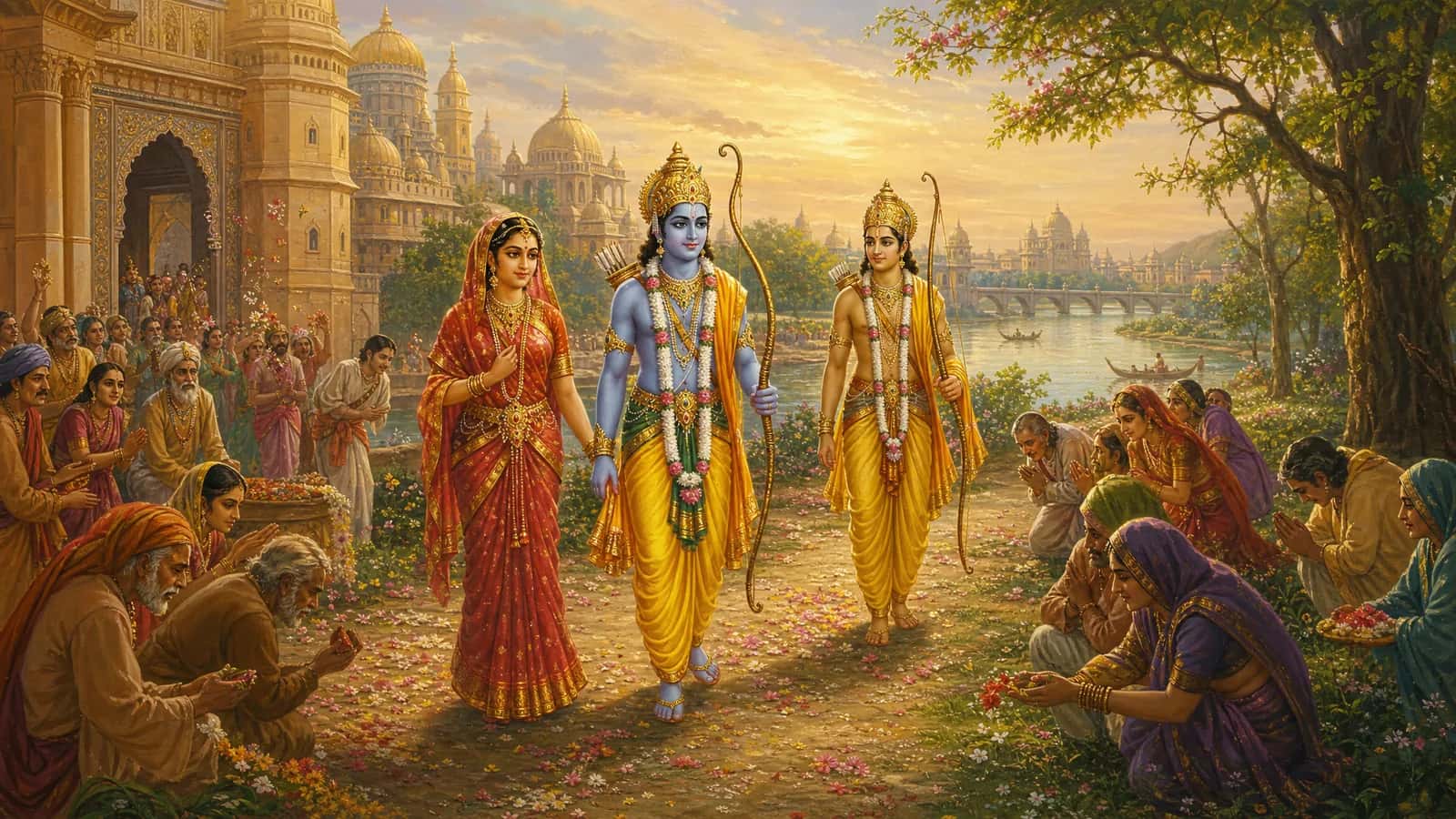
King Dashrath decides to crown Shri Ram, and Ayodhya Kand brings us to the moment when the throne appears ready for Him. Then Manthara prompts Kaikeyi to claim her two boons. The course of events changes. Shri Ram goes into exile for fourteen years, accompanied by Mata Sita and Lakshman. The story moves from the prospect of coronation to life away from Ayodhya.
Kevat ferries them across the Ganga. King Dashrath dies, and Bharat refuses the throne. His meeting with Shri Ram at Chitrakoot brings the brothers together, yet it does not lead to Shri Ram’s return. The paduka, Shri Ram’s sandals, take their place in the account of Bharat’s devotion.
This kand teaches that dharma asks us to remain faithful when circumstances overturn our hopes. Shri Ram’s exile and Bharat’s refusal of the throne place duty above personal gain. Ayodhya Kand contains 326 dohas.
In this kand
- InvocationInvocations
- Doha 3Preparations for Śrī Rāma’s installation as the Prince Regent of Ayodhyā; the god’s concern over the same and their approaching Goddess Sarasvatī for help
- Doha 12Sarasvatī perverts the mind of Mantharā (a handmaid of queen Kaikeyī); dialogue between Kaikeyī and Mantharā
- Doha 23Kaikeyī enters the sulking-chamber
- Doha 25Dialogue between king Daśaratha and Kaikeyī; Daśaratha’s lamentation; Sumantra goes to the palace and, returning from it, sends Śrī Rāma to His father
- Doha 39Dialogue between Śrī Rāma and mother Kaikeyī
- Doha 44Dialogue between Śrī Rāma and His father; the sadness of the people of Ayodhyā; their remonstrances with Kaikeyī
- Doha 51Dialogue between Śrī Rāma and mother Kausalyā
- Doha 60Dialogue between Sītā and Śrī Rāma
- Doha 66Dialogue between Śrī Rāma, Kausalyā and Sītā
- Doha 68Dialogue between Śrī Rāma and Lakṣmaṇa
- Doha 73Dialogue between Lakṣmaṇa and mother Sumitrā
- Doha 75Śrī Rāma, Lakṣmaṇa and Sītā call on king Daśaratha to take leave of him; Daśaratha’s exhortation to Sītā
- Doha 79Śrī Rāma, Sītā and Lakṣmaṇa proceed to the woods and slip past the citizens, deep in sleep
- Doha 86Śrī Rāma’s arrival at Śṛṅgaverapura; the Niṣāda chief’s services
- Doha 90Dialogue between Lakṣmaṇa and the Niṣāda; Sumantra’s dialogue with Śrī Rāma and Sītā and his departing for Ayodhyā
- Doha 99The boatman’s love and the passage across the Gaṅgā, Sītā’s prayer to Gaṅgā
- Doha 105Arrival at Prayāga and dialogue between Śrī Rāma and the sage Bharadvāja; the love of the people inhabiting the bank of the Yamunā
- Doha 109The episode of an ascetic
- Doha 110Śrī Rāma greets the Yamunā; love of the villagers
- Doha 125Dialogue between Śrī Rāma and the sage Vālmīki
- Doha 132Śrī Rāma takes up His abode at Citrakūṭa; the services of the Kolas and Bhīlas
- Doha 142Sumantra returns to Ayodhyā and finds the city a picture of grief
- Doha 147Dialogue between king Daśaratha and Sumantra, Daśaratha’s passing away
- Doha 155The sage Vasiṣṭha sends envoys to call Bharata
- Doha 158Arrival and lamentation of Bharata and Śatrughna
- Doha 162Dialogue between Bharata and mother Kausalyā and king Daśaratha’s cremation
- Doha 169Dialogue between the sage Vasiṣṭha and Bharata; Bharata prepares for a journey to Citrakūṭa in order to bring Śrī Rāma back to Ayodhyā
- Doha 184Departure of Bharata and Śatrughna with the citizens of Ayodhyā to the woods
- Doha 189The Niṣāda’s suspicion and precautions
- Doha 193Bharata’s meeting and dialogue with the Niṣāda chief; the love of Bharata and the citizens of Ayodhyā for Śrī Rāma
- Doha 203Bharata’s arrival at Prayāga and dialogue between Bharata and the sage Bharadvāja
- Doha 205Bharadvāja shows hospitality to Bharata
- Doha 217Dialogue between Indra and his preceptor (the sage Bṛhaspati)
- Doha 221Bharata on his way to Citrakūṭa
- Doha 225Sītā’s dream; the Kolas and Kirātas bring news of Bharata’s arrival to Śrī Rāma; Śrī Rāma’s concern at the report; Lakṣmaṇa’s outburst of passion
- Doha 231Śrī Rāma admonishes Lakṣmaṇa and dwells on Bharata’s greatness
- Doha 233Bharata takes a dip in the Mandākinī and arrives at Citrakūṭa; Bharata and others meet one another, mourn the king’s death and perform his Śrāddha (obsequies)
- Doha 248Hospitality of the foresters towards Bharata and his party; Kaikeyī’s remorse
- Doha 252Vasiṣṭha’s speech
- Doha 258Dialogue between Śrī Rāma, Bharata and others
- Doha 273King Janaka’s arrival at Citrakūṭa; the Kolas and Kirātas offer presents to the visitors and all meet one another
- Doha 279Dialogue between queens Kausalyā and Sunayanā (king Janaka’s wife); Sītā’s amiability
- Doha 287Dialogue between king Janaka and his wife; Bharata’s glory
- Doha 291Dialogue between king Janaka and Bharata; Indra’s anxiety; Goddess Sarasvatī’s admonition to Indra
- Doha 294Dialogue between the sage Vasiṣṭha, Śrī Rāma and Bharata
- Doha 309Bharata deposits the sacred waters; his perambulation through Citrakūṭa
- Doha 312Dialogue between Śrī Rāma and Bharata; Śrī Rāma’s gift of His sandals; Bharata’s farewell
- Doha 314Returning to Ayodhyā, Bharata places the Lord’s sandals on the throne and takes up his residence at Nandigrāma; the virtue of listening to Bharata’s story
Contents
- ॐ
- 1
- 2
- 3
- 4
- 5
- 6
- 7
- 8
- 9
- 10
- 11
- 12
- 13
- 14
- 15
- 16
- 17
- 18
- 19
- 20
- 21
- 22
- 23
- 24
- 25
- 26
- 27
- 28
- 29
- 30
- 31
- 32
- 33
- 34
- 35
- 36
- 37
- 38
- 39
- 40
- 41
- 42
- 43
- 44
- 45
- 46
- 47
- 48
- 49
- 50
- 51
- 52
- 53
- 54
- 55
- 56
- 57
- 58
- 59
- 60
- 61
- 62
- 63
- 64
- 65
- 66
- 67
- 68
- 69
- 70
- 71
- 72
- 73
- 74
- 75
- 76
- 77
- 78
- 79
- 80
- 81
- 82
- 83
- 84
- 85
- 86
- 87
- 88
- 89
- 90
- 91
- 92
- 93
- 94
- 95
- 96
- 97
- 98
- 99
- 100
- 101
- 102
- 103
- 104
- 105
- 106
- 107
- 108
- 109
- 110
- 111
- 112
- 113
- 114
- 115
- 116
- 117
- 118
- 119
- 120
- 121
- 122
- 123
- 124
- 125
- 126
- 127
- 128
- 129
- 130
- 131
- 132
- 133
- 134
- 135
- 136
- 137
- 138
- 139
- 140
- 141
- 142
- 143
- 144
- 145
- 146
- 147
- 148
- 149
- 150
- 151
- 152
- 153
- 154
- 155
- 156
- 157
- 158
- 159
- 160
- 161
- 162
- 163
- 164
- 165
- 166
- 167
- 168
- 169
- 170
- 171
- 172
- 173
- 174
- 175
- 176
- 177
- 178
- 179
- 180
- 181
- 182
- 183
- 184
- 185
- 186
- 187
- 188
- 189
- 190
- 191
- 192
- 193
- 194
- 195
- 196
- 197
- 198
- 199
- 200
- 201
- 202
- 203
- 204
- 205
- 206
- 207
- 208
- 209
- 210
- 211
- 212
- 213
- 214
- 215
- 216
- 217
- 218
- 219
- 220
- 221
- 222
- 223
- 224
- 225
- 226
- 227
- 228
- 229
- 230
- 231
- 232
- 233
- 234
- 235
- 236
- 237
- 238
- 239
- 240
- 241
- 242
- 243
- 244
- 245
- 246
- 247
- 248
- 249
- 250
- 251
- 252
- 253
- 254
- 255
- 256
- 257
- 258
- 259
- 260
- 261
- 262
- 263
- 264
- 265
- 266
- 267
- 268
- 269
- 270
- 271
- 272
- 273
- 274
- 275
- 276
- 277
- 278
- 279
- 280
- 281
- 282
- 283
- 284
- 285
- 286
- 287
- 288
- 289
- 290
- 291
- 292
- 293
- 294
- 295
- 296
- 297
- 298
- 299
- 300
- 301
- 302
- 303
- 304
- 305
- 306
- 307
- 308
- 309
- 310
- 311
- 312
- 313
- 314
- 315
- 316
- 317
- 318
- 319
- 320
- 321
- 322
- 323
- 324
- 325
- 326
The seven kands
From the Gita Press, Gorakhpur edition. Buy the book