Was Ravan present at Sita's swayamvar?
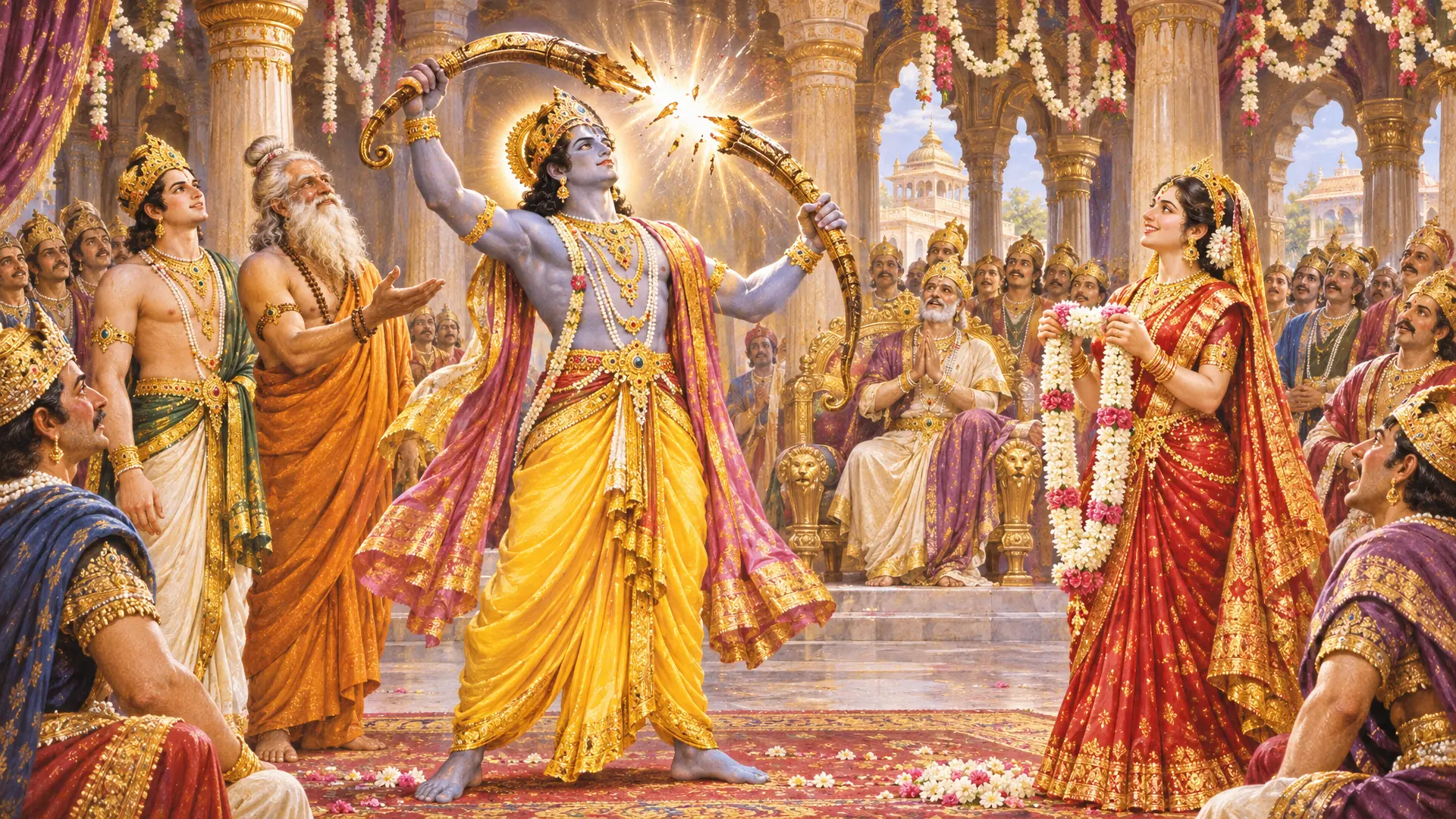
Yes, according to Goswami Tulsidas’s Ramcharitmanas, Ravan was present at Mata Sita’s swayamvar and withdrew without lifting Lord Shiva’s bow. The text says that Ravan and Banasur did not even touch it. The passages in Maharshi Valmiki’s Ramayana describe kings who could not lift the bow, but they do not name Ravan.
Ravan in the Ramcharitmanas
The Ramcharitmanas establishes Ravan’s presence through three statements. When King Janak’s heralds announce his vow, they describe the strength of the bow and name two mighty warriors who withdrew before it.
नृप भुजबलु बिधु सिवधनु राहू। गरुअ कठोर बिदित सब काहू॥ रावनु बानु महाभट भारे। देखि सरासन गवँहिं सिधारे॥१॥ Ramcharitmanas, Bal Kand, Doha 250, Chaupai 1
“The strength of the kings’ arms is like the moon, while Lord Shiva’s massive, unyielding bow is like Rahu. Even the mighty warriors Ravan and Banasur saw the bow and quietly departed.”
Mata Sita’s mother makes the point still clearer. Concerned that the same bow is being placed before the young Shri Ram, she recalls what happened to the other warriors.
रावन बान छुआ नहिं चापा। हारे सकल भूप करि दापा॥ सो धनु राजकुअँर कर देहीं। बाल मराल कि मंदर लेहीं॥२॥ Ramcharitmanas, Bal Kand, Doha 256, Chaupai 2
“Ravan and Banasur did not touch the bow, and all the kings failed despite their pride. They are placing that bow in this young prince’s hands. Can young swans lift Mount Mandar?”
The word छुआ means “touched.” It sets a clear boundary around what we should understand. Ravan’s presence is stated, but an attempt by him to lift the bow is not described.
Later, King Janak’s messengers recount the assembly to King Dasharath.
सकइ उठाइ सरासुर मेरू। सोउ हियँ हारि गयउ करि फेरू॥ जेहिं कौतुक सिवसैलु उठावा। सोउ तेहि सभाँ पराभउ पावा॥४॥ Ramcharitmanas, Bal Kand, Doha 292, Chaupai 4
“Even Banasur, who could lift Mount Meru, lost heart, walked around the bow and departed. Ravan, who had lifted Mount Kailash in sport, suffered defeat in that assembly.”
Here, one may question how Ravan could suffer defeat without attempting to lift the bow. The statements agree: he failed to meet the condition of the assembly. Defeat does not require us to imagine a physical attempt that the account does not describe.
The account in the Valmiki Ramayana
In Maharshi Valmiki’s Ramayana, King Janak tells Vishwamitra that kings came seeking Mata Sita’s hand. They could not lift the bow, and he declined their requests. Angered by this rejection, they besieged Mithila. These passages in Bala Kanda, Sarga 66, do not name Ravan.
Mata Sita also recounts the marriage condition to Anasuya in Ayodhya Kanda, Sarga 118. Her father announced that whoever lifted and strung the bow would become her husband. She describes the kings’ withdrawal:
तच्च दृष्ट्वा धनुःश्रेष्ठं गौरवाद् गिरिसंनिभम्। अभिवाद्य नृपा जग्मुरशक्तास्तस्य तोलने॥ ४३॥ Valmiki Ramayana, Ayodhya Kanda, Sarga 118, Shloka 43
“Seeing the excellent bow, which seemed like a mountain in its weight, the kings saluted it and departed, unable to lift it.”
The distinction is plain. Ravan’s presence at Mata Sita’s swayamvar is stated in the Ramcharitmanas. He is not mentioned in these Valmiki Ramayana passages. Accounts of Ravan attempting and failing to lift the bow belong to later tradition.
What the episode teaches us
Past strength does not guarantee success in every task. The messengers recall Ravan’s lifting of Mount Kailash alongside his defeat in the assembly. The contrast reminds us to examine pride in our own abilities.
For example, imagine a student who solves difficult calculations with ease. When asked to explain a simple idea clearly, the student may struggle. Skill in one task does not remove the need to learn another. Similarly, earlier achievements should encourage effort without making us careless about our limitations.
Careful reading is also a practice of humility. We should allow the scripture to guide our understanding. When reading this episode, distinguish what it states from what we remember hearing elsewhere.
The 2026 film
The 2026 film retells this episode. Read the scripture itself to consider its words and teaching.