Who was Surpanakha, and who was her husband?
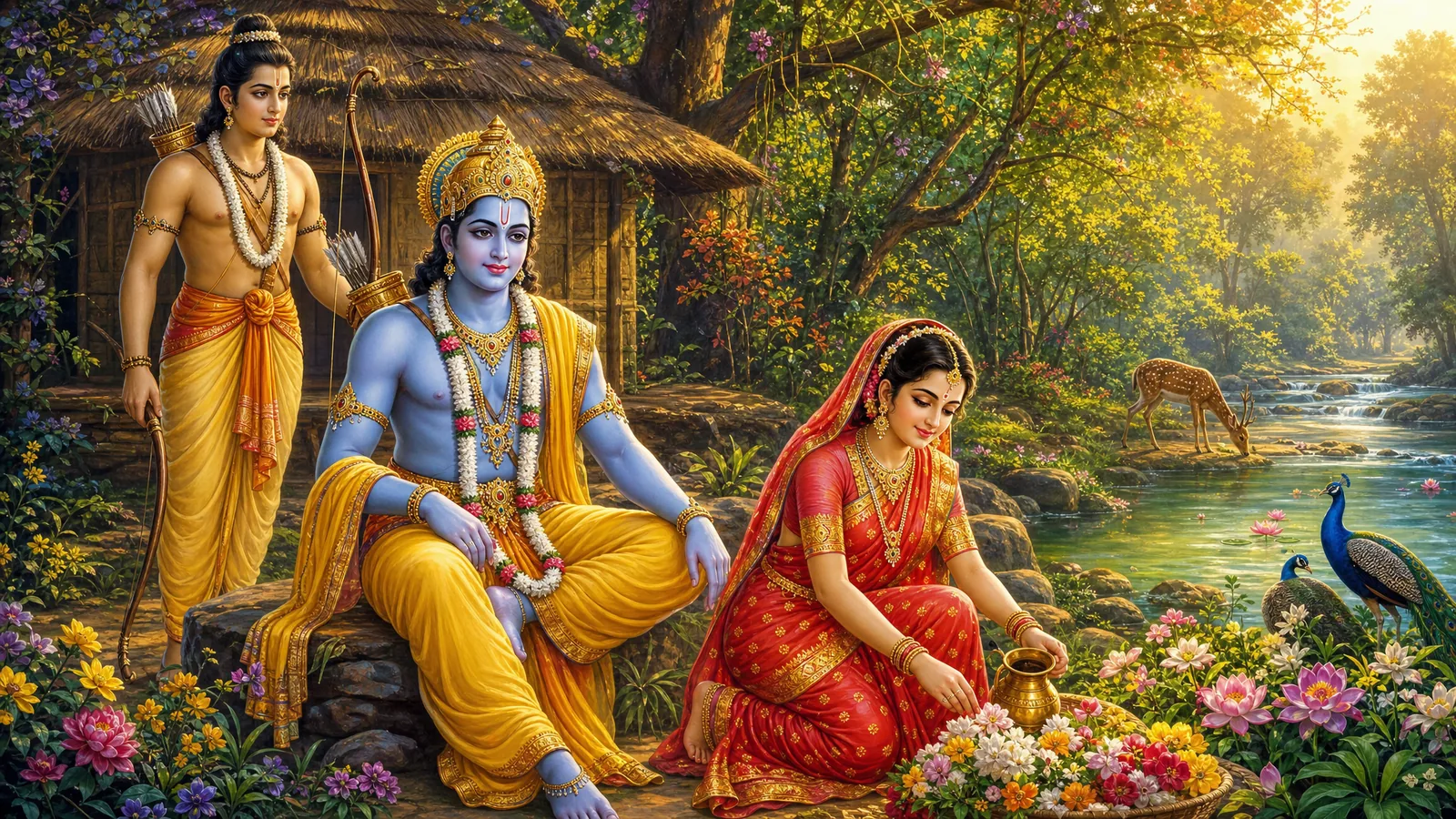
Surpanakha was Ravan’s sister, a rakshasi who could assume different forms. In Maharshi Valmiki’s Ramayana, her husband was Vidyujjihva, chief of the Danavas and son of Kalaka, whom Ravan later killed. The Ramcharitmanas does not name a husband and presents Surpanakha’s claim that she had remained unmarried as part of her deceptive approach to Shri Ram.
Surpanakha in the Ramcharitmanas
Goswami Tulsidas introduces Surpanakha through her relationship to Ravan and the condition of her heart:
सूपनखा रावन कै बहिनी। दुष्ट हृदय दारुन जस अहिनी॥ पंचबटी सो गइ एक बारा। देखि बिकल भइ जुगल कुमारा॥२॥ Ramcharitmanas, Aranya Kand, Doha 17, Chaupai 2
“Surpanakha was Ravan’s sister, wicked at heart and dreadful like a serpent. Once she went to Panchavati, where the sight of the two princes stirred her with desire.”
She assumes a charming form and approaches Shri Ram. Smiling, she declares that no man is His equal and no woman is hers. She then explains why, according to her own account, she has no husband:
मम अनुरूप पुरुष जग माहीं। देखेउँ खोजि लोक तिहु नाहीं॥ तातें अब लगि रहिउँ कुमारी। मनु माना कछु तुम्हहि निहारी॥ ५ ॥ Ramcharitmanas, Aranya Kand, Doha 17, Chaupai 5
“I searched the three worlds and found no man suitable for me. Hence, I have remained unmarried until now. On seeing You, my mind has found some satisfaction.”
The word कुमारी here means unmarried. We must observe who speaks it. This is Surpanakha’s claim within the narrative, where Goswami Tulsidas has already shown her adopting a charming appearance to approach the Lord.
Later, Lakshmanji cuts off her nose and ears. She goes weeping to Khar and Dushan, addressing them as brothers. After their destruction, she approaches Ravan and incites him against Shri Ram.
Her husband in the Valmiki Ramayana
In the Aranya Kanda, Surpanakha identifies herself as a rakshasi capable of taking any form and names Ravan as her brother. The Uttara Kanda gives the account of her marriage:
स्वसारं कालकेयाय दानवेन्द्राय राक्षसीम्। ददौ शूर्पणखां नाम विद्युज्जिह्वाय राक्षसः॥ २॥ Valmiki Ramayana, Uttara Kanda, Sarga 12, Shloka 2
“Ravan gave his sister Surpanakha in marriage to Vidyujjihva, chief of the Danavas and son of Kalaka.”
During his conquests, Ravan reaches Ashmanagara and kills Vidyujjihva with his sword. Surpanakha subsequently reproaches her brother:
कृतास्मि विधवा राजंस्त्वया बलवता बलात्। एते राजंस्त्वया वीर्याद् दैत्या विनिहता रणे॥ २७॥ Valmiki Ramayana, Uttara Kanda, Sarga 24, Shloka 27
“O king, powerful as you are, you have forcibly made me a widow. These Daityas were slain in battle by your strength.”
The difference is plain. Maharshi Valmiki’s Uttara Kanda records that Surpanakha was married and widowed. In the Ramcharitmanas, she calls herself unmarried while presenting herself deceptively to Shri Ram. Her speech should therefore be read as her own claim, rather than as the poet’s independent account of her marital history.
There is also a difference in the description of Khar. Surpanakha calls Khar and Dushan her brothers in the Aranya Kanda. The Uttara Kanda identifies Khar more specifically:
प्रभुः प्रयाणे दाने च राक्षसानां महाबलः। तत्र मातृष्वसेयस्ते भ्रातायं वै खरः प्रभुः॥ ३७॥ Valmiki Ramayana, Uttara Kanda, Sarga 24, Shloka 37
“Mighty Khar can direct and provide for the rakshasas. He is your cousin, the son of your mother’s sister.”
Ravan sends Surpanakha to live under Khar’s protection in the Dandaka forest.
What this episode teaches us
Appearance does not establish character. Surpanakha’s charming form does not change the heart that Goswami Tulsidas describes. The episode directs our attention from outward beauty to inward intention.
A claim must be understood in its setting. Her statement about being unmarried belongs to her attempt to win Shri Ram. Careful reading requires us to distinguish a character’s words from the narrator’s account.
Her grief over Vidyujjihva also deserves attention. She tells Ravan that her husband was dearer to her than life. Read that sorrow alongside her conduct at Panchavati, giving each passage its due.
The 2026 film
The 2026 film retells this episode. Read the scripture itself to see how each text tells her story.