Did Lakshman never sleep?
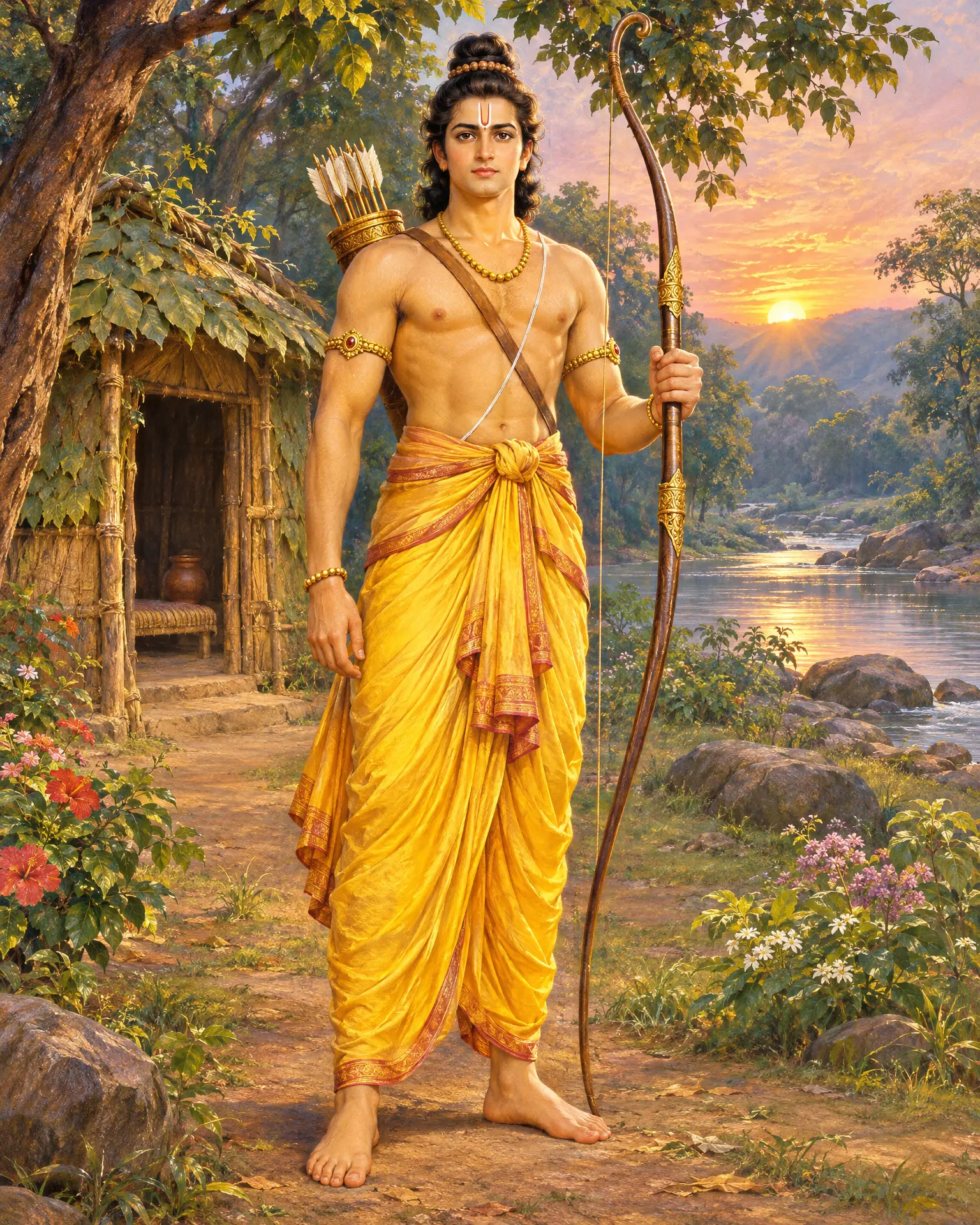
The story that Lakshman stayed awake for fourteen years of exile while Urmila slept in his place belongs to later tradition. Neither Maharshi Valmiki’s Ramayana nor the Ramcharitmanas tells this story. Both describe Lakshman keeping watch at night. Maharshi Valmiki also describes Shri Ram gently waking him one morning on the approach to Chitrakoot.
The night watch in the Valmiki Ramayana
At the Tamasa, Lakshman and Sumantra spend the night speaking about Shri Ram:
जाग्रतोरेव तां रात्रिं सौमित्रेरुदितो रविः । सूतस्य तमसातीरे रामस्य ब्रुवतो गुणान् ॥ १६ ॥ Valmiki Ramayana, Ayodhya Kanda, Sarga 46, Shloka 16
“Lakshman and Sumantra remained awake throughout the night on the bank of the Tamasa, speaking of Shri Ram’s virtues, until the sun rose.”
This verse describes one whole night without sleep. It does not say that Lakshman gives up sleep for the entire exile.
At Shringverpur, Guha sees Lakshman keeping watch:
तं जाग्रतमदम्भेन भ्रातुरर्थाय लक्ष्मणम् । गुहः संतापसंतप्तो राघवं वाक्यमब्रवीत् ॥ १ ॥ Valmiki Ramayana, Ayodhya Kanda, Sarga 51, Shloka 1
“Guha, distressed, spoke to Lakshman, who was sincerely keeping awake for his brother’s sake.”
The word अदम्भेन means without pretence. Lakshman’s watch expresses his sincere love for Shri Ram.
He then explains his feelings to Guha:
लक्ष्मणस्तु तदोवाच रक्ष्यमाणास्त्वयानघ । नात्र भीता वयं सर्वे धर्ममेवानुपश्यता ॥ ८ ॥ कथं दाशरथौ भूमौ शयाने सह सीतया । शक्या निद्रा मया लब्धुं जीवितं वा सुखानि वा ॥ ९ ॥ Valmiki Ramayana, Ayodhya Kanda, Sarga 51, Shlokas 8 and 9
“Lakshman said, ‘O sinless Guha, with you protecting us according to dharma, none of us has any fear here. While Shri Ram lies on the ground beside Mata Sita, sleep, nourishment and other comforts are impossible for me.’”
Lakshman feels safe under Guha’s protection. Yet the sight of Shri Ram and Mata Sita lying on the ground leaves him unable to rest.
Later, Shri Ram speaks of the responsibility both brothers share:
जागर्तव्यमतन्द्रिभ्यामद्यप्रभृति रात्रिषु । योगक्षेमौ हि सीताया वर्तेते लक्ष्मणावयोः ॥ ३ ॥ Valmiki Ramayana, Ayodhya Kanda, Sarga 53, Shloka 3
“Lakshman, from today we must both remain alert and keep awake at night, for Mata Sita’s needs and protection are our responsibility.”
Shri Ram includes Himself in this duty. Both brothers must care for Mata Sita and protect her. This instruction to keep watch does not mean that Lakshman never sleeps.
Lakshman did sleep
On the approach to Chitrakoot, Maharshi Valmiki describes Shri Ram waking Lakshman:
अथ रात्र्यां व्यतीतायामवसुप्तमनन्तरम् । प्रबोधयामास शनैर्लक्ष्मणं रघुपुङ्गवः ॥ १ ॥ Valmiki Ramayana, Ayodhya Kanda, Sarga 56, Shloka 1
“When the night had passed, Shri Ram gently woke Lakshman, who was asleep.”
Lakshman’s response is also clear:
प्रसुप्तस्तु ततो भ्रात्रा समये प्रतिबोधितः । जहौ निद्रां च तन्द्रां च प्रसक्तं च परिश्रमम् ॥ ३ ॥ Valmiki Ramayana, Ayodhya Kanda, Sarga 56, Shloka 3
“Awakened at the proper time by his elder brother, Lakshman shook off sleep, drowsiness and the tiredness of walking.”
These verses show that Lakshman slept during the exile. When Shri Ram wakes him, he rises and shakes off his tiredness. His need for rest does not diminish his devotion.
The Ramcharitmanas shows Lakshman keeping watch
Goswami Tulsidas describes Lakshman’s care in the Ayodhya Kand:
उठे लखनु प्रभु सोवत जानी। कहि सचिवहि सोवन मृदु बानी॥ कछुक दूरि सजि बान सरासन। जागन लगे बैठि बीरासन॥१॥ Ramcharitmanas, Ayodhya Kand, Doha 90, Chaupai 1
“Seeing that Shri Ram was asleep, Lakshman rose and gently asked Sumantra to sleep. Then, a little distance away, he sat in virasana with bow and arrows and began keeping watch.”
Lakshman cares for Sumantra too. He gently asks him to rest before taking his place with his weapons. Goswami Tulsidas shows his devotion through these simple actions. The chaupai describes a night watch without claiming that Lakshman remains sleepless throughout the exile.
The story of Urmila belongs to later tradition
The account of Lakshman asking Nidra Devi to spare him sleep, and of Urmila sleeping on his behalf, belongs to later tradition.
We can respect this tradition while keeping its source clear. Neither Maharshi Valmiki’s Ramayana nor the Ramcharitmanas tells this story of Urmila. Their accounts of Lakshman’s night watches should be understood on their own terms.
Watchful service begins with attention
Lakshman notices what is needed and takes responsibility. He keeps watch, speaks kindly to Sumantra and rises when Shri Ram wakes him.
For example, someone accompanying an elderly parent to an appointment can put away the phone and listen carefully to the instructions. Later, they can help the parent remember what was said. Such care begins with attention. We can learn from Lakshman by noticing another person’s needs and responding patiently.
Today, choose one small act of care. Remember Shri Ram and give that task your full attention.
Questions people ask
Did Lakshman never sleep?
Lakshman kept awake on nights described in both texts. Maharshi Valmiki also describes him sleeping in Ayodhya Kanda, Sarga 56. The claim of fourteen sleepless years belongs to later tradition.
Who slept for Lakshman?
Later tradition says Urmila slept on Lakshman’s behalf. Neither Maharshi Valmiki’s Ramayana nor the Ramcharitmanas tells this story.
Where did Lakshman keep watch?
Maharshi Valmiki describes Lakshman staying awake at the Tamasa with Sumantra and at Shringverpur, where Guha speaks to him. The Ramcharitmanas also describes him keeping watch with bow and arrows while Shri Ram sleeps.
Why did Urmila not go to the forest?
These accounts of Lakshman’s night watches do not explain why Urmila did not go to the forest. The later tradition about her sleeping on his behalf is a separate story.