Kishkindha in the Ramayana: Shri Ram and Sugriv
Kishkindha is the kingdom where Sugriv is installed on the throne after Shri Ram kills Bali. In Goswami Tulsidas's Ramcharitmanas, Kishkindha Kand tells of Shri Ram's meeting with Hanumanji and Sugriv, the monsoon and the search for Mata Sita. Tradition places Kishkindha near Hampi and Anegundi in Karnataka on the Tungabhadra.
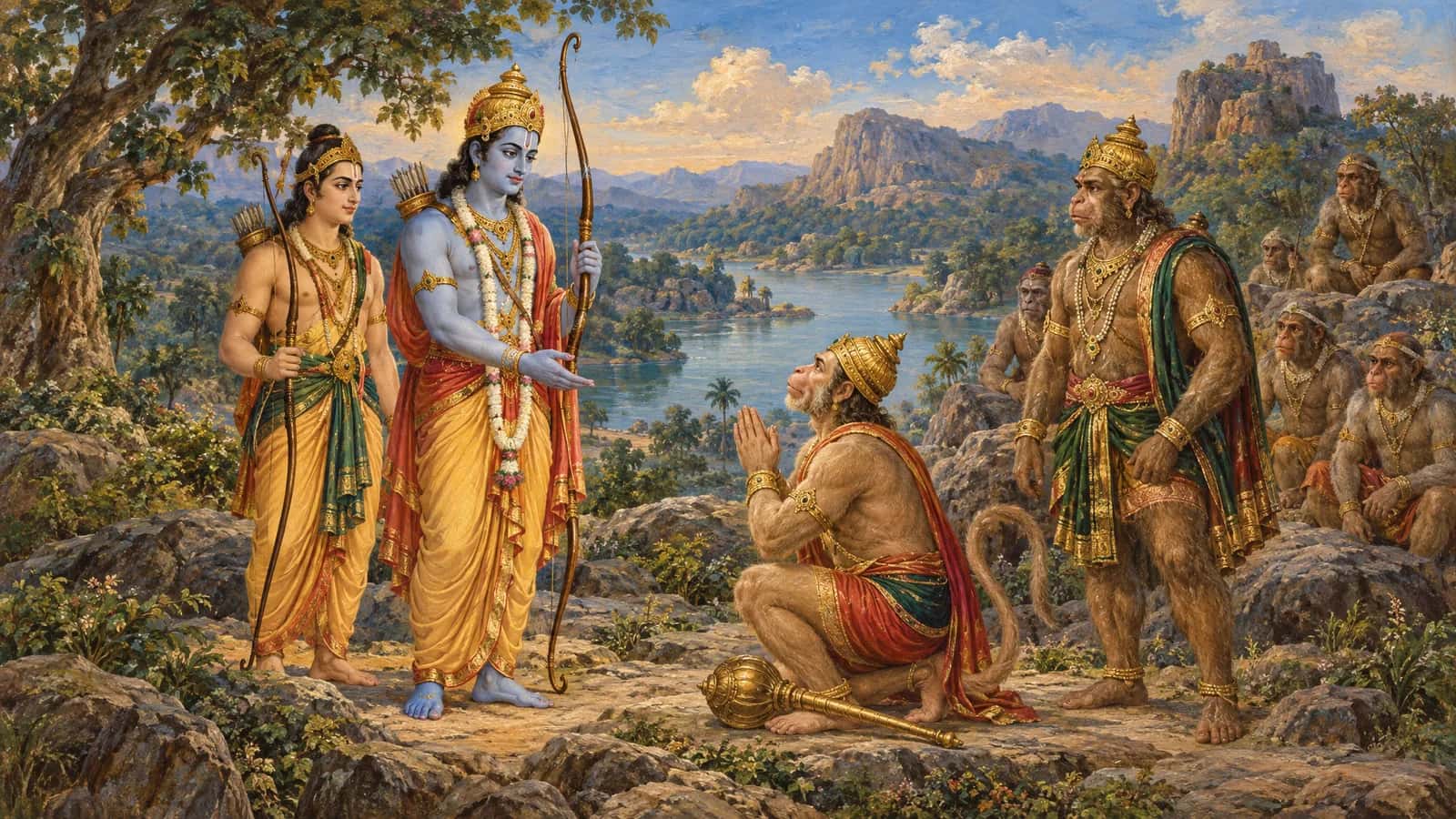
Shri Ram's alliance with Sugriv
In Kishkindha Kand, the search for Mata Sita brings Shri Ram into fellowship with Hanumanji and Sugriv. The meeting leads to an alliance, followed by the death of Bali and Sugriv's installation on the throne of Kishkindha. Goswami Tulsidas recalls this sequence in Uttar Kand, doha 66b, as Kakbhushundi recounts the Lord's deeds to Garuda.
Kishkindha thus marks a change in the search. Shri Ram now has an ally in Sugriv, while Hanumanji's service becomes central to what follows. Read these events together: the meeting, the alliance and the change of ruler prepare the way for the search parties.
The rains on Mount Pravarshan
After Sugriv receives the throne of Kishkindha, Shri Ram takes up residence on Mount Pravarshan. Uttar Kand, doha 66b, recalls the rains, the autumn that follows, Shri Ram's displeasure with Sugriv and Sugriv's dismay. The account places the changing seasons beside the responsibility that remains: Mata Sita must be found.
The throne does not bring the alliance's work to an end. Sugriv's kingship belongs within a larger duty, and the search must proceed. As we read this part of Kishkindha Kand, we should attend to that connection. Receiving help also brings an obligation to honour the purpose for which help was given.
Hanumanji prepares for the search
Kishkindha Kand moves from the alliance and the monsoon to the search parties. Before doha 30, Jamvant reminds Hanumanji of his strength. This encouragement prepares the way for Sunderkand, where Hanumanji crosses the sea to Lanka and finds Mata Sita. Kishkindha is therefore closely connected with the service for which devotees remember Hanumanji.
The sequence offers a practical teaching. Strength must be brought to bear on the duty before us. Jamvant's reminder directs attention towards what Hanumanji can accomplish in Shri Ram's service. Continue from Kishkindha Kand into Sunderkand to see that strength expressed through the search for Mata Sita.
Verses
प्रभु नारद संबाद कहि मारुति मिलन प्रसंग। पुनि सुग्रीव मिताई बालि प्रान कर भंग॥६६ (क)॥
After narrating the Lord’s talk with the sage, Nārada, as well as the episode of His meeting with Hanumān, the son of the wind-god, Bhuśuṇḍi told of Śrī Rāma’s alliance with Sugrīva and of Bāli’s death at His hands. (66 A) He further related how after installing Sugrīva on the throne of Kiṣkindhā, the Lord took up His abode on Mount Pravarṣaṇa, gave an account of the rains as well as of the autumn that immediately followed and told of Śrī Rāma’s indignation with Sugrīva and the latter’s dismay. (66 B)
Uttar Kand, Doha 66b Ramayan appFree. No ads. Works offline.Install
Questions people ask
Where is Kishkindha today?
Tradition places Kishkindha near Hampi and Anegundi in Karnataka on the Tungabhadra. In the Ramcharitmanas, it is the kingdom where Sugriv receives the throne after Bali's death. Uttar Kand, doha 66b, recalls his installation and Shri Ram's subsequent residence on Mount Pravarshan.
What happens at Kishkindha in the Ramayana?
Kishkindha Kand tells of Shri Ram's meeting with Hanumanji and Sugriv, the alliance with Sugriv, Bali's death, the monsoon and the search parties. Uttar Kand, doha 66b, recalls the alliance and Sugriv's kingship. Before Kishkindha Kand, doha 30, Jamvant reminds Hanumanji of his strength.
Is Kishkindha Kand the same as Sunderkand?
Kishkindha Kand is the fourth kand of the Ramcharitmanas, and Sunderkand is the fifth. Kishkindha Kand prepares the search for Mata Sita and includes Jamvant's encouragement to Hanumanji before doha 30. Sunderkand follows with Hanumanji's crossing to Lanka, his meeting with Mata Sita and his return with her message.