How does the Ramayana end?
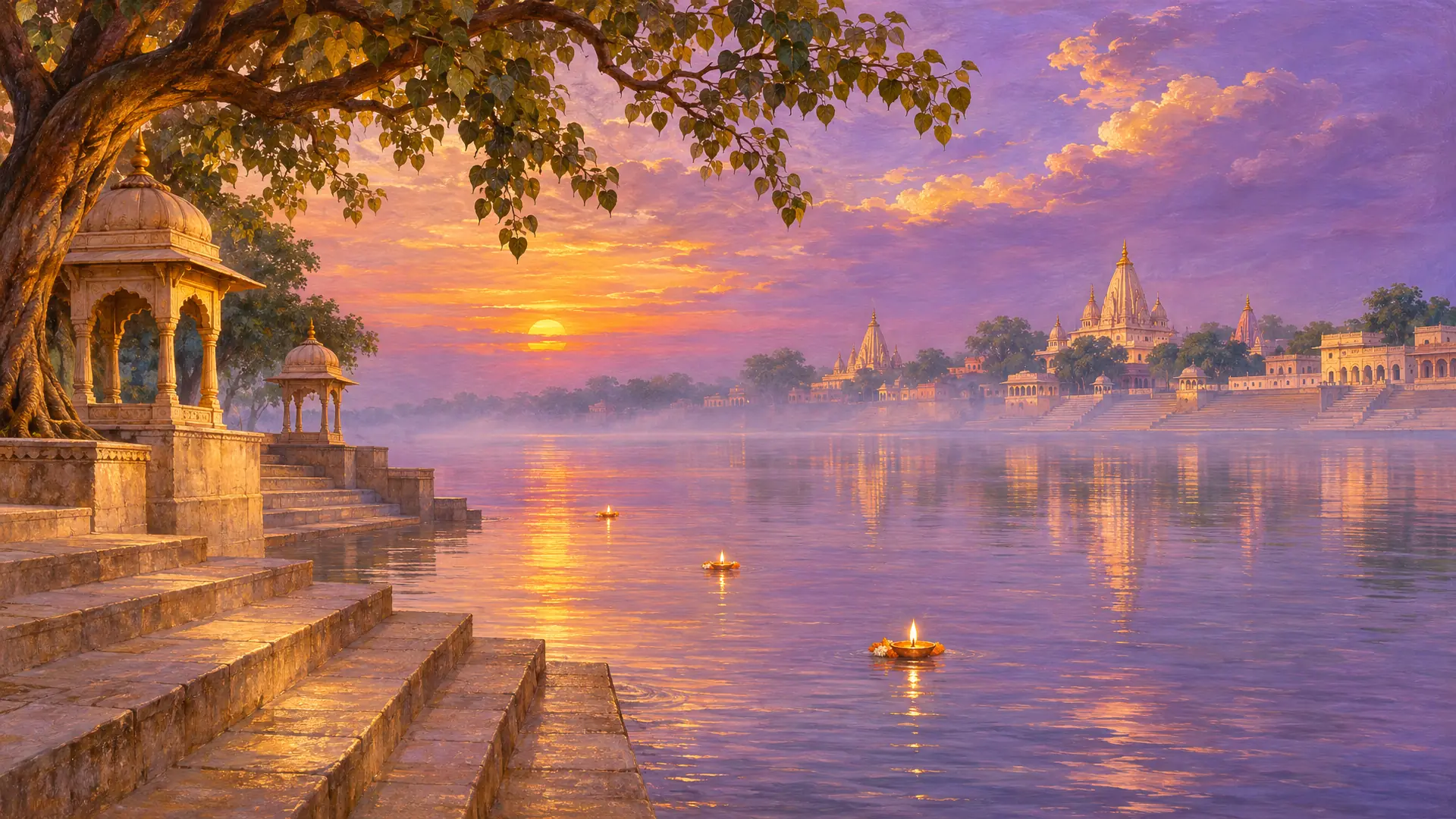
In Valmiki's Uttara Kanda, Mata Sita takes an oath affirming her faithfulness to Shri Ram, and Mother Earth receives her. Indra later takes Lakshman bodily to heaven from the Saryu bank. Shri Ram steps into the Saryu with His brothers and enters His own form as Vishnu.
Goswami Tulsidas describes Ram Rajya and mentions Lav and Kush in the Ramcharitmanas but does not narrate these departures.
Mata Sita's oath and her return to the earth
Before the assembly, Mata Sita affirms her purity. She calls upon Mother Earth to receive her if her words are true:
यथाहं राघवादन्यं मनसापि न चिन्तये । तथा मे माधवी देवी विवरं दातुमर्हति ॥ १४ ॥ Valmiki Ramayana, Uttara Kanda, Sarga 97, Shloka 14
“As I have never thought of any man other than Shri Ram, even in my mind, may Mother Earth grant me a place to enter.”
The word मनसापि, “even in mind”, affirms her faithfulness in thought. Mother Earth receives her in fulfilment of her oath.
The assembly is overwhelmed:
सीताप्रवेशनं दृष्ट्वा तेषामासीत् समागमः । तन्मुहूर्तमिवात्यर्थं समं सम्मोहितं जगत् ॥ २६ ॥ Valmiki Ramayana, Uttara Kanda, Sarga 97, Shloka 26
“Those assembled witnessed Mata Sita's entry into the earth. For a moment, the whole world seemed utterly stunned.”
Shri Ram grieves:
प्रविष्टायां तु सीतायां भूतलं सत्यसम्पदा । तस्यावसाने यज्ञस्य रामः परमदुर्मनाः ॥ ३ ॥ Valmiki Ramayana, Uttara Kanda, Sarga 99, Shloka 3
“When Mata Sita had entered the earth through the power of her truth, Shri Ram was deeply sorrowful at the close of the sacrifice.”
Her truth and His grief appear together. We can honour her purity while allowing ourselves to feel the sorrow of their separation.
Lakshman's departure beside the Saryu
Kaal, Time, came to Shri Ram in the form of an ascetic, bearing a message and asking to speak alone. Shri Ram told Lakshman that whoever heard or saw their conversation would be put to death by him, as stated in Valmiki Ramayana, Uttara Kanda, Sarga 103, Shloka 15. Lakshman stood guard at the door.
Then the sage Durvasa arrived. He demanded to see Shri Ram at once and threatened to curse the whole kingdom. Faced with this choice, Lakshman resolved that he alone should die so that everyone else might be spared.
एकस्य मरणं मेऽस्तु मा भूत् सर्वविनाशनम् । इति बुद्ध्या विनिश्चित्य राघवाय न्यवेदयत् ॥ ९ ॥
Valmiki Ramayana, Uttara Kanda, Sarga 105, Shloka 9
“Let me alone die, but let there be no destruction of all. Having resolved this in his mind, Lakshman informed Shri Ram of Durvasa’s arrival.”
Shri Ram now faced the promise he had made, leading to his renunciation of Lakshman.
Later, Shri Ram renounces Lakshman to uphold dharma:
विसर्जये त्वां सौमित्रे मा भूद् धर्मविपर्ययः । त्यागो वधो वा विहितः साधूनां ह्यभयं समम् ॥ १३ ॥ Valmiki Ramayana, Uttara Kanda, Sarga 106, Shloka 13
“Son of Sumitra, I renounce you so that dharma may not be violated. For the righteous, abandonment and death are alike.”
Lakshman's response is immediate:
रामेण भाषिते वाक्ये बाष्पव्याकुलितेन्द्रियः । लक्ष्मणस्त्वरितं प्रायात् स्वगृहं न विवेश ह ॥ १४ ॥ Valmiki Ramayana, Uttara Kanda, Sarga 106, Shloka 14
“When Shri Ram spoke these words, Lakshman departed at once with his eyes full of tears. He did not enter his home.”
He goes to the river:
स गत्वा सरयूतीरमुपस्पृश्य कृताञ्जलिः । निगृह्य सर्वस्रोतांसि निःश्वासं न मुमोच ह ॥ १५ ॥ Valmiki Ramayana, Uttara Kanda, Sarga 106, Shloka 15
“Reaching the bank of the Saryu, he ritually sipped water, joined his hands, restrained all his senses and held his breath.”
The account then describes his bodily departure:
अदृश्यं सर्वमनुजैः सशरीरं महाबलम् । प्रगृह्य लक्ष्मणं शक्रस्त्रिदिवं संविवेश ह ॥ १७ ॥ Valmiki Ramayana, Uttara Kanda, Sarga 106, Shloka 17
“Indra took mighty Lakshman, who was in his body and unseen by all people, and entered heaven with him.”
Maharshi Valmiki describes Lakshman restraining his senses and breath, followed by Indra taking him bodily to heaven. His body is not described as being left beside the river.
Shri Ram's return to His own form
Shri Ram approaches the Saryu amid celestial music:
तूर्यैस्तूर्यशतैः कीर्णं गन्धर्वाप्सरसंकुले । सरयूसलिलं रामः पद्भ्यां समुपचक्रमे ॥ ७ ॥ Valmiki Ramayana, Uttara Kanda, Sarga 110, Shloka 7
“As hundreds of musical instruments sounded and Gandharvas and Apsaras filled the place, Shri Ram stepped forward to enter the waters of the Saryu.”
Brahma welcomes Him as Vishnu:
ततः पितामहो वाणीं त्वन्तरिक्षादभाषत । आगच्छ विष्णो भद्रं ते दिष्ट्या प्राप्तोऽसि राघव ॥ ८ ॥ Valmiki Ramayana, Uttara Kanda, Sarga 110, Shloka 8
“Then Brahma spoke from the sky: Come, Vishnu. Blessings upon You, descendant of Raghu. How fortunate we are that You have returned.”
Shri Ram enters His own divine radiance:
पितामहवचः श्रुत्वा विनिश्चित्य महामतिः । विवेश वैष्णवं तेजः सशरीरः सहानुजः ॥ १२ ॥ Valmiki Ramayana, Uttara Kanda, Sarga 110, Shloka 12
“Hearing Brahma's words and having made His resolve, Shri Ram entered His own Vaishnav radiance, with His brothers and in His body.”
The word सशरीरः means “in His body”. Maharshi Valmiki presents this departure as Shri Ram's return to His divine form.
What the Ramcharitmanas says
Goswami Tulsidas describes Ram Rajya, Shri Ram's reign, in Uttar Kand. Within this account, he mentions the birth of Lav and Kush:
अहनिसि बिधिहि मनावत रहहीं। श्रीरघुबीर चरन रति चहहीं॥ दुइ सुत सुंदर सीताँ जाए। लव कुस बेद पुरानन्ह गाए॥३॥ Ramcharitmanas, Uttar Kand, Doha 25, Chaupai 3
“Day and night they prayed to Brahma, seeking love for Shri Ram's feet. Mata Sita bore two beautiful sons, Lav and Kush, whom the Vedas and Puranas describe.”
The Ramcharitmanas continues beyond its description of Ram Rajya. Goswami Tulsidas does not narrate Mata Sita's abandonment or these final departures. We can honour both works while remembering which account contains each event.
Truth remains when an earthly chapter closes
Mata Sita's truth is affirmed, yet Shri Ram feels the pain of separation. His sorrow has a place in this account. Reverence allows us to acknowledge that pain without turning away from her faithfulness or His divine return.
In daily life, telling the truth can also leave room for sadness. A child who admits to breaking a cup may still cry, and the cup remains broken. Yet honesty can help preserve trust between the child and the parent. We too can speak truthfully and gently when something painful has happened.
Before sleep, remember one moment when honesty felt difficult. Offer it to Shri Ram. Choose one truthful, gentle action for tomorrow.
Questions people ask
What happened to Sita at the end of the Ramayana?
In Maharshi Valmiki's Uttara Kanda, Mata Sita affirms her purity before the assembly. She calls upon Mother Earth, who receives her in fulfilment of her oath.
Why did Sita go into the earth?
Mata Sita asks Mother Earth to receive her if she has been faithful to Shri Ram, even in thought. Her entry into the earth affirms the truth of her oath.
How did Lakshman die?
Maharshi Valmiki describes Lakshman going to the Saryu's bank, restraining his senses and holding his breath. Indra then takes him to heaven in his body, unseen by people.
How did Shri Ram die?
Maharshi Valmiki describes Shri Ram entering the Saryu and returning to His divine form. Brahma welcomes Him as Vishnu, and He enters His own Vaishnav radiance with His brothers, in His body.
How long was Sita in Lanka?
Maharshi Valmiki describes Ravan giving Mata Sita a twelve-month deadline, in Aranya Kanda, Sarga 56, Shloka 24. During Hanumanji's visit, Ravan says two months remain, in Sundara Kanda, Sarga 22, Shloka 8. This indicates that about ten months of the deadline have passed by then. It does not give the exact total length of her stay.