Shri Ram: His Life and Teachings in the Ramayana
Shri Ram is the Supreme Lord who appears as the son of King Dashrath in Ayodhya and marries Mata Sita. In the Ramcharitmanas, Goswami Tulsidas reveals His divine nature through His human life. Shri Ram honours duty, treats others with gentleness and sustains His devotees. His conduct teaches us how righteousness and compassion belong together.
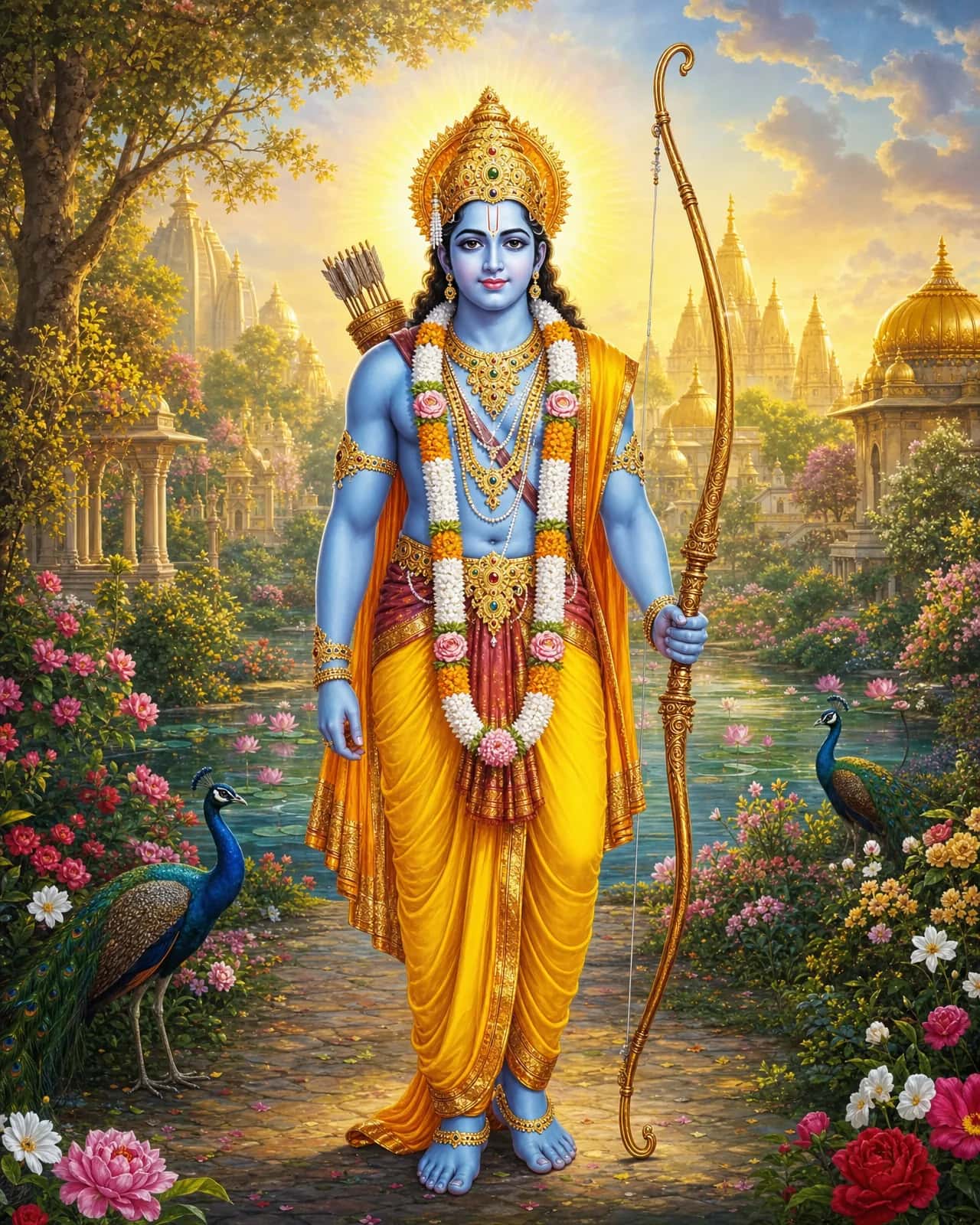
The Supreme Lord appears as a child
Shri Ram's human form does not limit His divine nature. In Bal Kand, Doha 51, He is revealed as the Supreme Eternal, all-pervading and ever free, who takes form for His devotees. This teaching guides how we read the childhood episodes that follow.
In Bal Kand, Doha 201, Mata Kausalya places Shri Ram in His cradle and later sees Him eating the food offered at her shrine. Returning to the cradle, she finds Him asleep there too. Her bewilderment draws our attention to the mystery: the child she cares for is the Lord she worships. Devotion allows the heart to love Him closely while recognising His greatness.
His strength is joined with humility
In Bal Kand, Doha 255, Shri Ram reverences His Guru and seeks the sages' permission before stepping forward at Mata Sita's swayamvar. His greatness is expressed through respect. Strength gives Him no reason to neglect those whom He honours.
The same gentleness appears in Bal Kand, Doha 279. Facing an angry sage, Shri Ram speaks with folded hands, asks that the younger brother's words be overlooked and offers to do what will pacify the sage. He does not answer anger with anger. These passages teach a practical discipline: when we have the power to answer sharply, we can still choose words that help another person regain peace.
In exile, He considers the needs of others
Ayodhya Kand brings Shri Ram's gracious conduct into the hardships of forest life. In Doha 100, Kevat asks to wash His feet before ferrying Him across and refuses a toll. The encounter gives a humble boatman a place in the Lord's story through his desire to serve.
In Ayodhya Kand, Doha 126, Shri Ram asks a sage where He may live with Mata Sita and Lakshman without disturbing the ascetics. Even while seeking shelter, He considers the peace of others. At Chitrakoot, the appeal in Ayodhya Kand, Doha 248, recognises Him as a support of righteousness and compassion. Duty does not make His heart indifferent to another person's sorrow.
His compassion sustains devotion
In Sunderkand, Doha 23, the instruction to abandon pride is joined with the call to worship Shri Ram as an ocean of compassion. Pride keeps us occupied with our own importance. Devotion turns our attention towards the Lord.
His care also appears amid battle. In Lanka Kand, Doha 48b, the monkeys return to His camp, and His gracious glance relieves their fatigue. The Lord who commands them also sustains them. Uttar Kand, Doha 51, shows the inward practice of devotion: Sage Narad departs after praising Shri Ram's virtues, keeping Him in his heart. We can begin with the same practice, reading His deeds attentively and remembering one virtue as we carry out the day's duties.
Verses
मुनि धीर जोगी सिद्ध संतत बिमल मन जेहि ध्यावहीं। कहि नेति निगम पुरान आगम जासु कीरति गावहीं॥ सोइ रामु ब्यापक ब्रह्म भुवन निकाय पति माया धनी। अवतरेउ अपने भगत हित निजतंत्र नित रघुकुलमनी॥
“He who has bodied Himself forth as Lord Śrī Rāma for the sake of His devotees is no other than the Supreme Eternal, who is all-pervading and ever free, who is the Ruler of all the worlds and the Lord of Māyā, whom illumined sages, Yogīs (mystics) and Siddhas (adepts) constantly meditate upon with their sinless mind and whose glory is sung by the Vedas as well as the Purāṇas and other scriptures in terms as ‘not this’, ‘not this’.”
Bal Kand, Doha 51धर्म सेतु करुनायतन कस न कहहु अस राम। लोग दुखित दिन दुइ दरस देखि लहहुँ बिश्राम॥२४८॥
“It is no wonder, Rāma, that you should speak like this, a bulwark of righteousness and an epitome of compassion that you are. But sorely grieved as the people are, let them derive solace by enjoying your sight for a couple of days.” (248)
Ayodhya Kand, Doha 248अति बिनीत मृदु सीतल बानी। बोले रामु जोरि जुग पानी॥ सुनहु नाथ तुम्ह सहज सुजाना। बालक बचनु करिअ नहिं काना॥१॥
With folded hands and speaking in most humble, gentle and placid tones Śrī Rāma said, “I pray to you, my lord! wise as you are by nature, pay no heed to the words of a child. (1)
Bal Kand, Doha 279निसा जानि कपि चारिउ अनी। आए जहाँ कोसला धनी॥ राम कृपा करि चितवा सबही। भए बिगतश्रम बानर तबही॥१॥
Perceiving that it was now night, all the four divisions of the monkey host returned to the camp of Ayodhyā’s lord, Śrī Rāma. The monkeys were all relieved of their fatigue the moment Śrī Rāma cast His benign look on them. (1)
Lanka Kand, Doha 48b Ramayan appFree. No ads. Works offline.Install
Questions people ask
Is Shri Ram God or a human king?
The Ramcharitmanas teaches that Shri Ram is the Supreme Lord who takes human form for His devotees. Bal Kand, Doha 51, states His eternal, all-pervading nature. His life as King Dashrath's son allows devotees to love Him through close relationships while learning from His conduct as a son, husband and ruler.
What can we learn from Shri Ram's life?
Shri Ram teaches us to uphold duty with humility and consideration. In Bal Kand, Doha 279, He answers anger with gentle words. In Ayodhya Kand, Doha 126, He seeks a dwelling where His presence will not disturb the ascetics. We can practise these teachings by speaking patiently and considering how our actions affect others.
Where should I start reading about Shri Ram?
Begin with Bal Kand to read about Shri Ram's divine nature, childhood and marriage to Mata Sita. Bal Kand, Doha 51, gives a clear foundation for understanding who He is. Continue into Ayodhya Kand to see His conduct during exile, including His concern for others in Doha 126.